
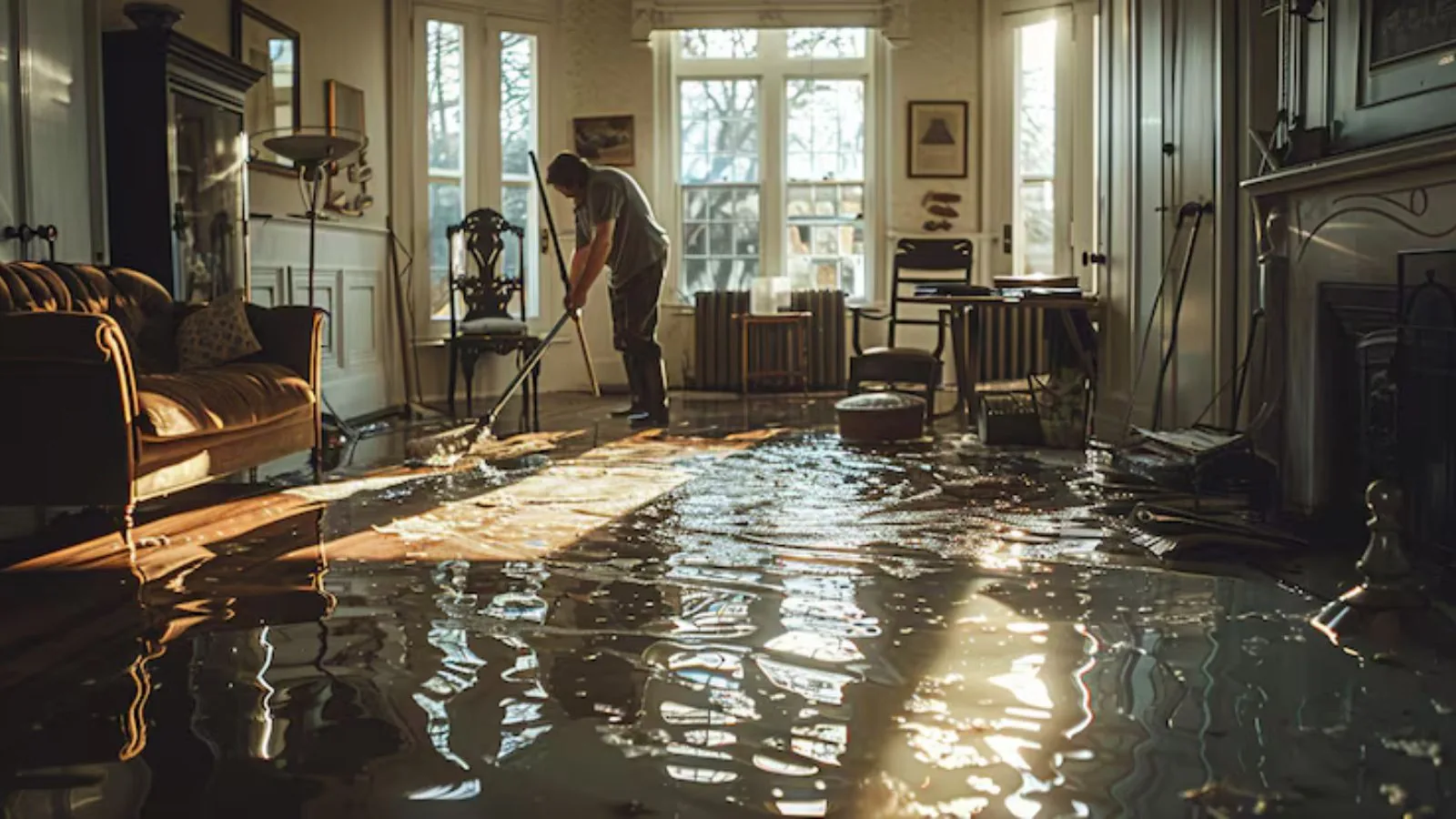
Water extraction is the removal of standing and soaked-in water from a building using pumps, wands and vacuum units, and it is the first real step in any wet-structure job. If you can see water on a floor right now, treat it as an emergency. The line is answered 24/7, and while you wait you can close the source, keep your feet out of the water, and lift anything valuable off the floor.
Extraction is not the same as drying. It takes out the bulk water so that the drying equipment can work on what is left inside the materials. A room that has been pumped out but not dried will smell musty within days, which is why the structural drying stage follows right behind.
When standing water is an emergency
Water that is ankle deep, still rising, or touching outlets and cords is an emergency, and so is any amount that has soaked a carpeted room or crossed a threshold into the next room. Water that came from a toilet, a drain or the outdoors is also urgent for a different reason, because it can carry contaminants.
Before you call, check three things. Is the source stopped? Is anything electrical wet or underwater? Is the water clear, or does it look cloudy or smell like sewage? Those answers tell the dispatcher whether you need clean-water extraction or a contaminated-water response.
Stop what is feeding it
Close the fixture valve, the appliance shutoff or the main. If the source is outside your control, such as rising river water, skip this step.
Keep clear of anything wired
Stay out of water that has reached outlets, power strips or the panel. Call the utility or 911 before you call us if you smell gas or see sparks.
Lift and move
Get books, boxes, small furniture and electronics off the floor. Leave heavy furniture where it stands and photograph it.
Note the depth
A rough measurement at the doorway, in inches, helps the crew decide what equipment to bring.
How extraction is done
The method follows the water. Shallow water on hard floors is pulled up with a wand and vacuum. Water standing in a basement or lower level goes out with a submersible pump and hose. Carpet and pad are extracted with weighted wands that press water up out of the fibers, and a crew will often lift the carpet to extract from the pad and the floor beneath it.
Water that has already wicked into walls is not removed by extraction alone. Crews use moisture meters and thermal imaging to find the wet areas that are not visible. They then decide whether a wall cavity can be dried in place or needs a flood cut. A flood cut is made a few inches above the water line so the wet drywall and insulation can come out.
| Situation | Equipment usually involved | What happens next |
|---|---|---|
| Shallow water on tile or concrete | Wet vacuum with a wand | Drying equipment placed on the floor and lower walls |
| Deep water in a low room | Submersible pump and hose | Remaining water extracted by vacuum, then drying |
| Soaked carpet and pad | Weighted extraction wand, sometimes a truck-mounted unit | Pad is usually removed, carpet is lifted and dried or replaced |
| Water behind baseboards | Moisture meter, thermal camera, small cuts | Cavity opened or dried through ports |
What makes New Bern water different
This is a river city. Standing water in a New Bern building is sometimes plumbing water and sometimes surface or tidal water, and the two are not handled alike. During Hurricane Florence in 2018, a USGS gauge on the Trent River recorded a 10.41 foot storm surge, per the NC State Climate Office, and any structure that took in that kind of water needs a more careful approach than a simple pump-out.
The tie-back for you is simple. If the water came up from outside, do not wade in it, and read our page on flood damage cleanup. If a pipe is the source, the burst pipe page covers what happens after the water is out. Low-lying streets near the Neuse and Trent rivers have the most to gain from fast extraction, because wet framing and subfloors have less time to swell.
Our drying and removal work follows the ANSI/IICRC S500 standard for water damage, which sets out water categories and the readings that show a material is dry.
The line is answered around the clock. Call and describe what you see.
What affects the cost of extraction
We explain the scope and how it is priced before work starts. These are the facts that move the job:
- Water category. Clean water, gray water and contaminated water carry different handling steps.
- Depth and area. A quarter inch across one room and a foot across a lower level are different jobs.
- Flooring. Extraction from hard surfaces is quick, while carpet and pad take longer.
- Access. Crawl spaces, tight basements and stairs add labor.
- What follows. Extraction usually leads straight into drying, and the number of drying days is the largest unknown.
Insurance depends on your policy and on what caused the water. Sudden and accidental water damage is often covered, and flood damage usually is not. Ask your insurer what documentation they want, and we will provide photos and moisture readings. Want your real number? Call the line.
Nearby calls and next steps
The same extraction work applies whether the water is in a downtown storefront or in Bridgeton, just over the Neuse River Bridge. If wet carpet is the main problem, the carpet water damage page explains when a pad can be saved and when it cannot.
Questions about water extraction
Do you handle water extraction emergencies at night or on weekends in New Bern?
Yes. The phone line is open 24/7, so a call at two in the morning is answered the same way as a call at noon. Describe the depth, the source and whether anything electrical is wet.
How is extraction different from drying?
Extraction removes the water you can pump or vacuum. Drying removes the moisture still held in wood, drywall and other materials, using air movers and dehumidifiers until readings return to normal.
Can I use a shop vacuum myself?
For a small clean-water spill on a hard floor, many people do. Anything deeper than a spill, anything that touched electrical equipment, and any water that smells or looks cloudy should be left to professionals.
Does the water have to be removed right away?
The sooner it is out, the less time it has to soak into framing and finishes. Wet carpet pad and drywall are the first materials to suffer.
What if the water came from a storm?
Treat storm and flood water as contaminated, stay out of it, and call. The crew will plan for contaminated-water handling.
Call the 24/7 line and describe the damage in your own words.