
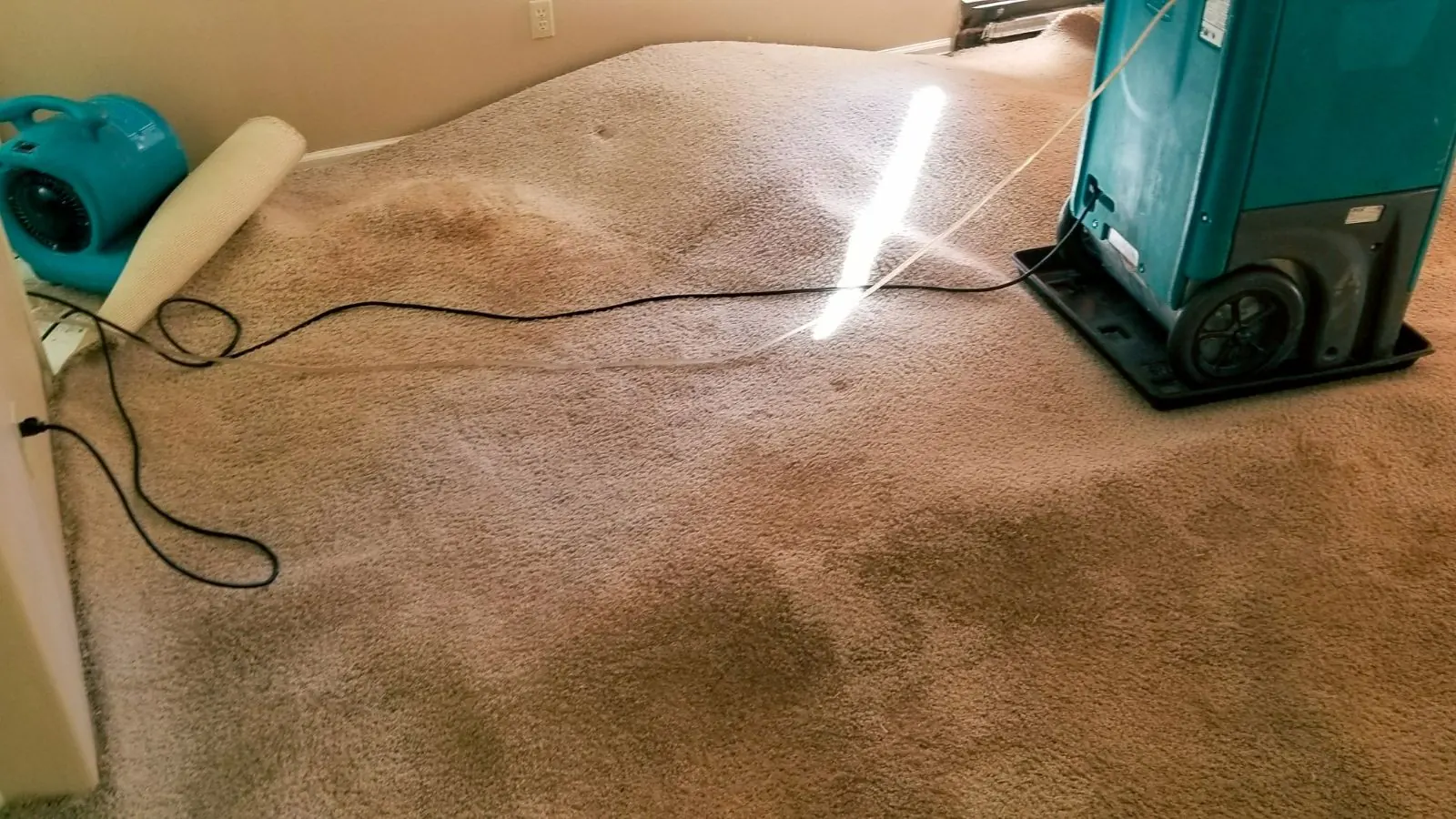
Basement water damage is damage to a below-grade room from water that seeps, floods or backs up into it. If you have water in your basement or lower level, treat it as an emergency. The phone line is answered 24/7, and the first rule is to stay out of the room if the water is deep or touching anything electrical.
Not every home in New Bern has a basement. Many houses sit on a slab or over a crawl space, and the crawl space water damage page covers the under-floor void. This page applies if you have a true below-grade room, a finished lower level, or a garage-level room that sits partly under the ground.
When a basement is an emergency
Any water that is deep enough to cover the floor, still rising or near the furnace, water heater or electrical panel is urgent. Water in a basement also adds weight, and a flooded space can make stairs and flooring unsafe. Do not carry heavy items through standing water.
If you can hear a sump pump running without stopping, or if it has stopped working, mention that on the call. A pump that never shuts off, or one that has quit, tells the crew a lot about where the water is coming from.
Stay off the stairs when deep
Stairs into water can be slippery, and an unseen hazard lies below the surface.
Mind the panel and appliances
If the panel is in the basement and wet, do not touch it. Call the utility or 911 if there is a risk.
Check the sump pump
If you have one, note whether it is running, stopped or overwhelmed.
Call and describe the source
Rain, a pipe, a drain or groundwater each calls for a different response.
Where basement water comes from
The water can arrive from several directions. Rain or groundwater can seep through floors and walls. A supply line or a water heater can fail inside the room. A floor drain can back up from the sewer. The source decides the category of water and the safety steps, which is why the dispatcher will ask about it.
Check the City of New Bern's flood zone lookup map or the state's Flood Risk Information System if you suspect outdoor water. A mapped flood hazard area is worth knowing about for insurance and for any rebuild, and a standard homeowners policy usually does not cover rising water. The NC Department of Insurance says so directly.
Pumping, extracting and drying a lower level
The work begins with removing the water, using submersible pumps for depth and wet vacuums for the rest. Finished materials, such as carpet, pad and drywall, are removed if they have wicked contaminated water, and framing and slab are dried with air movers and dehumidifiers.
| Water source | Category | Typical handling |
|---|---|---|
| Supply line or water heater | Clean | Extraction, drying, drywall and carpet assessed |
| Rain or groundwater | Often contaminated | More material removed, sanitizing |
| Sewer backup | Contaminated | Safety first, removal of porous materials |
| Appliance | Clean or gray | Extraction, drying |
Contaminated lower levels are covered on the sewage backup cleanup page. For equipment and moisture readings, see structural drying.
The line is answered around the clock. Call and describe what you see.
Restoration is not waterproofing
A lower level that takes on water repeatedly has a source problem, and drying it again does not solve it. Waterproofing, drainage and foundation work are separate trades, and we will say so honestly if that is what your house needs. We dry and restore, and then you decide how to keep water out.
What to move and what to leave
If water is shallow and the room is safe to enter, lift boxes, furniture and electronics off the floor and onto higher ground. Leave heavy items for the crew. Stored paper and cardboard soak up water quickly, so move them first if you can do so without wading through deep water.
Our drying and removal work follows the ANSI/IICRC S500 standard for water damage, which sets out water categories and the readings that show a material is dry.
What affects the cost
We explain the scope and how it is priced before work starts. For a basement the factors are:
- Water depth and category.
- Square footage and how much is finished.
- What was stored there.
- Drying days, which depend on the slab and walls.
- Rebuild of finished space.
Insurance depends on the source. Rising water is generally excluded from a standard homeowners policy, while a sudden plumbing failure may be covered. Ask your insurer. Want a real number? Call the line.
Questions about basement water
Do you handle basement water emergencies at night or on weekends in New Bern?
Yes. The phone line is open 24/7. Stay clear of deep water and call.
Do I need a sump pump?
That depends on your house and the water table, and it is a question for a plumber or a drainage contractor.
Can you waterproof my basement?
No. We dry and restore after water gets in. Waterproofing is a different trade.
Is the water in my basement dangerous?
It can be, especially if it came from outside or from a drain. Avoid contact and wait for the crew.
Will insurance cover basement flooding?
Rising water is usually excluded from a standard homeowners policy. Check your policy.
Call the 24/7 line and describe the damage in your own words.