
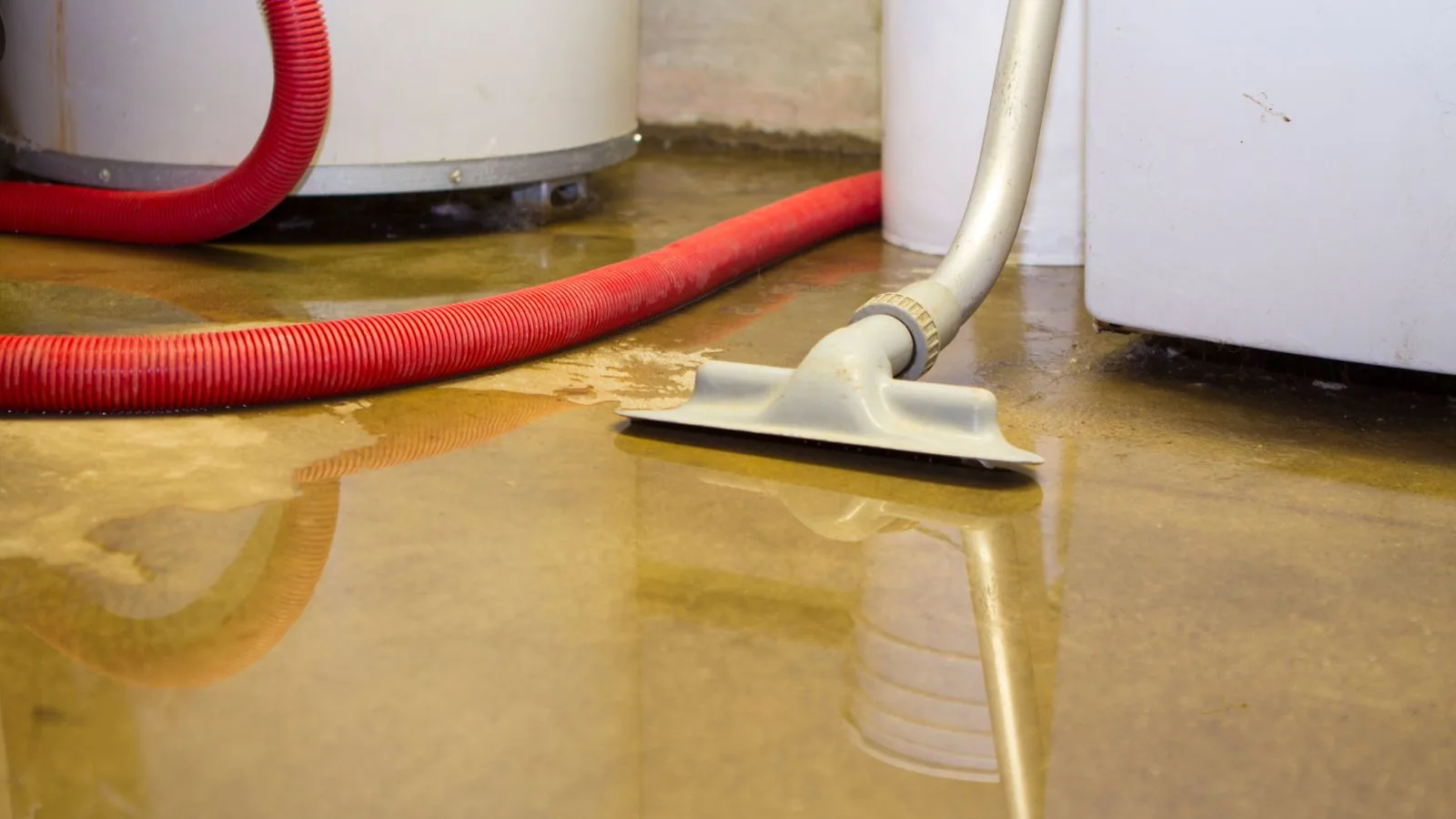
Commercial water damage restoration is the extraction, drying and repair of a business property after a water loss, whether that is a shop, an office, a restaurant, a church hall or an apartment building. If your business has water on the floor, treat it as an emergency. The line is open 24/7, so a Friday night sprinkler failure or a Sunday pipe break gets the same answer as a weekday call.
Business losses differ from residential ones because downtime costs money, tenants and customers are affected, and the building often has shared systems. A small leak in a ground-floor unit may reach the units below or beside it, and a landlord, a tenant and an insurer may all be involved.
When a business loss is an emergency
Water that has reached inventory, electronics, equipment or customer areas is urgent. So is water in a shared wall or ceiling, because it can spread to neighbors. If you can safely do it, shut off water to the affected area, move inventory and equipment off the floor, and photograph the damage. If there is any electrical risk or gas smell, call the utility or 911 first.
Tell the dispatcher about the building. Owner or tenant, how many units, whether the space is occupied, and whether any part is open to the public will all shape the plan.
Shut off the source
Find the valve for the area, or the main. If a sprinkler line has discharged, call the fire protection company too.
Protect what you can
Lift stock, files and equipment off the floor. Do not spend time on items that are already soaked.
Notify the right people
Property managers, landlords and insurers all want to hear early. Keep a list of who you called and when.
Document everything
Date-stamped photos and a list of damaged items are helpful for claims.
What makes commercial work different
Commercial buildings have larger floor areas, concrete slabs, commercial carpet, drop ceilings and shared mechanical systems. Drying often involves large dehumidifiers and many air movers, and the equipment has to work around business hours when possible.
For multi-unit properties, the order of work matters. Extraction and drying begin where the water started and extend to affected neighbors, and communication with tenants is part of the job.
| Building type | Typical challenge | What helps |
|---|---|---|
| Retail or storefront | Inventory and customer access | Quick extraction, staged drying |
| Restaurant | Kitchen equipment, floors, health rules | Documented cleaning and dry readings |
| Office | Electronics, files, carpet tile | Contents moved, drop ceilings checked |
| Multi-unit residential | Water traveling between units | Coordinated moisture mapping across units |
| Church or hall | Large floor areas, older finishes | Extended drying, careful material review |
The downtown context
Downtown New Bern's historic district has older masonry and wood-frame buildings, and the district is described as roughly bounded by the Neuse and Trent rivers and Queen Street, with 492 contributing structures. Renovation or repair in a historic building may bring review requirements, so ask the City of New Bern before you change original materials.
For you, the tie-back is practical. Document what was there before the loss, because it will matter for both the claim and any approvals.
Insurance and the paperwork
Commercial policies vary widely, and business interruption coverage is separate from property coverage. Ask your insurer which applies, and keep records of lost time as well as damage. We provide moisture readings, photos and an itemized scope. Never assume that coverage includes everything, and never start permanent repairs before your insurer has had a chance to inspect.
The line is answered around the clock. Call and describe what you see.
Keeping a business running
Where it is safe, a crew can dry one area at a time so the rest of the space stays usable. Tell the dispatcher which rooms matter most to your operation, such as a kitchen line, a sales floor or a server closet, and the plan can account for them. Some rooms may need to close while equipment runs.
Our drying and removal work follows the ANSI/IICRC S500 standard for water damage, which sets out water categories and the readings that show a material is dry.
What affects the cost
We explain the scope and how it is priced before work starts. For commercial work the factors are:
- The square footage and number of affected units.
- The building materials and what finishes are present.
- Water category and source.
- The equipment and drying days needed.
- Access and the schedule around business hours.
Want a real number? Call the line.
Related help
Water that came from a sewer line has its own safety steps on the sewage backup cleanup page, and storm intrusion is covered on the storm water damage page. We also serve businesses along the US 17 corridor, including Vanceboro.
Commercial water damage questions
Do you handle commercial water emergencies at night or on weekends in New Bern?
Yes. The phone line is open 24/7. Call as soon as you find the water, and tell us the building type.
Can you work around our business hours?
We plan the work with you where we can, but safety and drying come first.
Do you handle multi-unit buildings?
Yes. Water often travels between units, so the crew maps moisture across them.
Do you work with property managers?
We can communicate with managers and landlords about scope and schedule. Insurance decisions are made by your insurer.
What should I document?
Photos, a list of damaged items, a record of when the water was found and when you called.
Call the 24/7 line and describe the damage in your own words.