
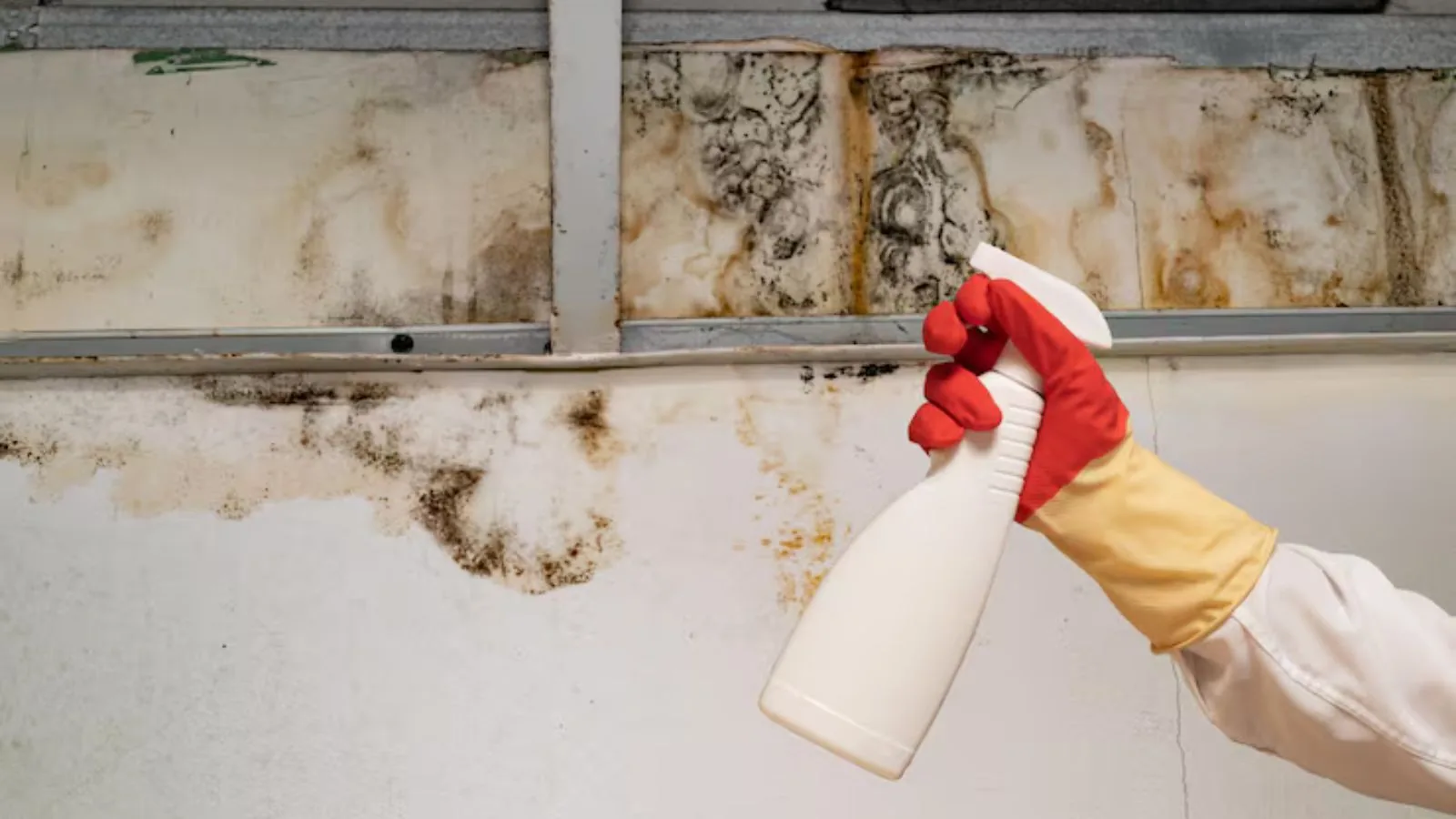
Mold remediation is the work of controlling the moisture that feeds mold, containing the affected area, and removing or cleaning the materials where it has grown. It is a different job from water damage restoration, although the two are closely linked, because mold usually appears where water was left behind. This page explains how the work is planned and what to expect.
If water is still present, deal with that first. Stop the source, then see water extraction and call the line, which is answered 24/7. Mold that returns after cleaning almost always means the moisture was never fully removed.
Musty smell, dark spots or a stain that keeps coming back?
Most people do not notice mold directly. They notice a smell in a closet or under a sink, a dark patch on a ceiling corner, paint that bubbles, or a water stain that dries and then returns. Any of these can point to moisture that is still in the building. Mold can also grow where you cannot see it, such as inside a wall cavity or under flooring.
Not every dark spot is mold. Dirt, soot and old stains can look similar, and only an inspection or lab test can confirm what a spot is. What matters for planning is the moisture. If a surface has been wet for more than a day or two, or the smell persists after drying, ask for moisture readings before anyone scrubs or paints.
Stop adding moisture
Fix the leak, run no humidifiers, and keep wet items out of closed rooms.
Do not disturb it
Brushing or sanding can spread spores through the home. Leave the area alone.
Keep the area closed
Close the door to the room and avoid running a fan that blows through it.
Photograph it
Date-stamped photos of the spot and the water source help later with insurance.
How a mold job is planned
A mold job begins with finding the moisture. A moisture meter and a thermal camera show where materials are wet, which is often a larger area than the visible growth. The crew then decides how to contain the work, usually with plastic sheeting and negative air, so that disturbed material does not travel into clean rooms.
The industry reference for this work is the ANSI/IICRC S520 standard, and the same body publishes the S500 standard for water damage. We follow those frameworks for planning, and we explain the scope before work starts.
| Stage | What happens | Why it matters |
|---|---|---|
| Moisture assessment | Meters and thermal imaging map wet areas | Mold returns if moisture remains |
| Containment | Sealed barriers and air filtration | Keeps disturbed material in the work area |
| Removal | Porous materials such as drywall or carpet pad are removed | These cannot be cleaned reliably once affected |
| Cleaning | Remaining surfaces are cleaned and vacuumed with HEPA equipment | Takes off residue |
| Drying | Air movers and dehumidifiers bring the structure down to normal levels | Prevents new growth |
Mold remediation does not mean a promise that mold will never come back. It means the visible growth is addressed and the conditions that fed it are corrected. If the building takes on water again, the risk returns.
Testing and who does what
Some owners want testing before work starts, and some insurers or buyers ask for it. A separate, independent assessor can sample the air or surfaces and write a protocol, and it is sensible for the person who tests to be a different party from the person who does the removal. We can say honestly when we think testing would be useful, and we do not require it to start planning.
The line is answered around the clock. Call and describe what you see.
When the source is hidden
Mold often traces back to a leak behind a wall or under a floor. The wall and drywall page explains how cavities are checked, and the crawl space page covers the under-floor void where humidity collects. Carpet and pad that stayed wet are discussed on the carpet water damage page.
What affects the cost
We explain the scope and how it is priced before work starts. For mold work the factors are:
- The size of the affected area and how far moisture has spread.
- The materials involved, since porous ones are removed.
- Containment and air filtration needed.
- Drying days after removal.
- Rebuild of removed finishes, priced separately.
Insurance coverage for mold depends on the cause of the water and the policy language. Ask your insurer before work begins, and keep photos and readings. Want a real number? Call the line.
Mold coverage in the area
We take mold calls for ZIP codes 28560 and 28562 in New Bern, and the phone line is the place to ask whether your address is in range.
Mold questions
Why does my house smell musty after a leak?
A musty smell after water usually means moisture remains in a wall, floor or insulation. Ask for moisture readings.
Can I clean mold myself?
Small, surface-level spots on hard materials can sometimes be cleaned by an owner. Larger areas, porous materials and anything near a wet cavity are better left to a crew with containment.
Do I need a mold test first?
Not always. Testing helps when a buyer, landlord or insurer asks for it, and it should be done by an independent party.
Will the mold come back?
Not if the moisture is fixed and the area stays dry. If the building takes on water again, it can return.
Will insurance cover mold removal?
It depends on the cause and the policy. Ask your insurer.
Call the 24/7 line and describe the damage in your own words.