
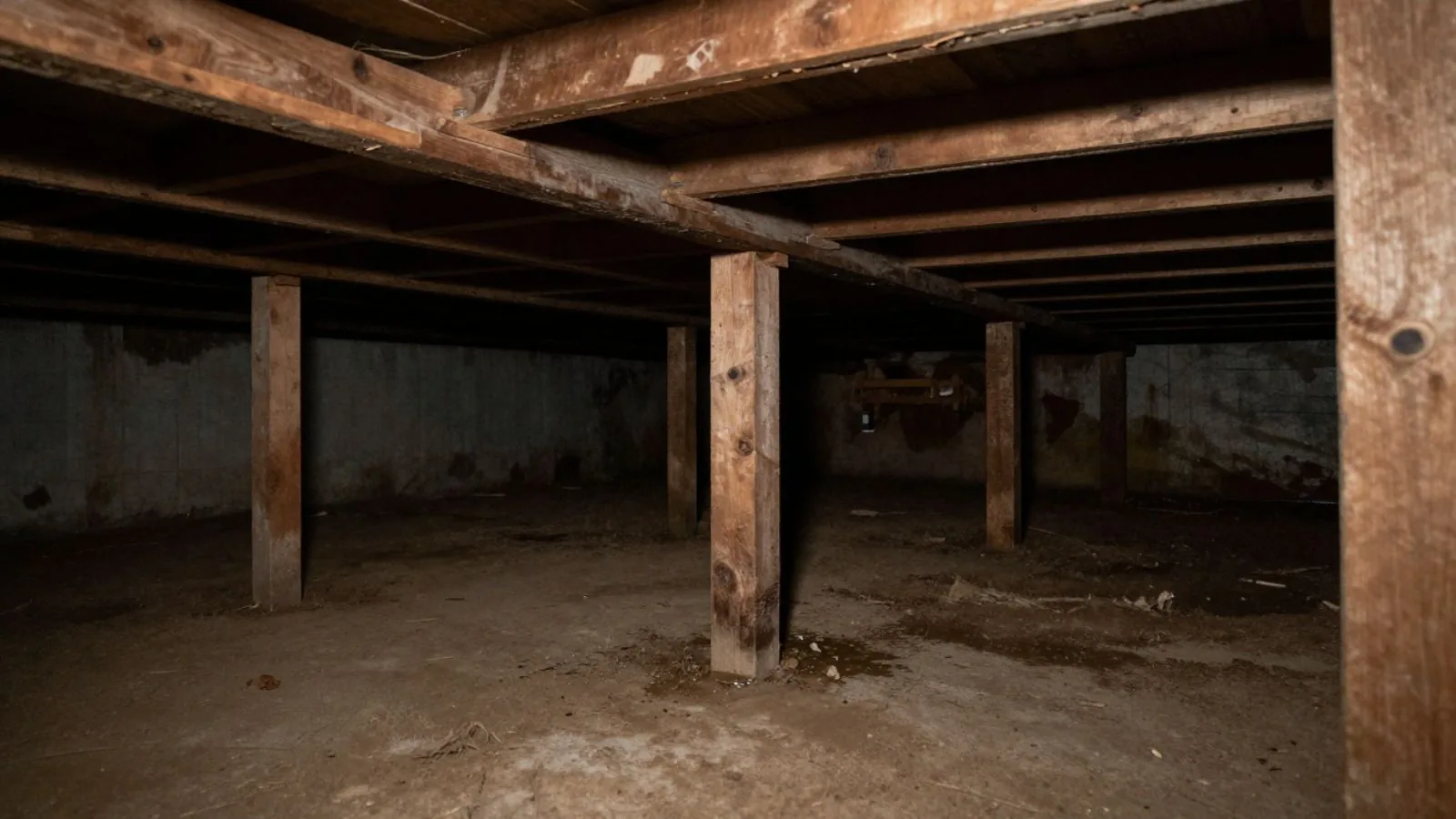
Crawl space water damage is water in the shallow void between the ground and the floor of a house, and the damage it causes to insulation, vapor barriers, joists and the subfloor. If your home sits over a crawl space, this is where plumbing leaks, drainage and humidity all end up. If your home sits on a slab, the slab leak page is more likely to apply.
Water in a crawl space is easy to ignore because no one goes there. That is also why the damage gets larger. Insulation hangs wet, wood stays damp, and the air above it carries a musty smell upstairs.
Signs that the crawl space is wet
You may not need to go under the house to know. Floors that feel cold, soft or springy, a persistent musty smell in the house, condensation on ductwork, or a spike in humidity indoors all suggest moisture below. Sagging insulation in the floor system is a classic sign.
If you do look, check safety first. Crawl spaces are tight, and electrical wiring and gas lines often run through them. Do not crawl into standing water, and if you smell gas or see damaged wiring, leave and call the utility or 911.
Look from the access panel
A flashlight from the opening shows standing water, hanging insulation and visible mold.
Do not enter standing water
Water can hide electrical hazards and sharp debris.
Note the signs upstairs
Cupping floors, musty smells and wet baseboards help us trace where the water is coming from.
Call with what you see
Describe the water, the insulation and the smell.
Where crawl space water comes from
The sources vary. A supply or drain line can leak under the floor. Rain or groundwater can enter at low points. A dryer vent that terminates under the house, or an HVAC drain line, can drip for months. Humid air can also condense on cool surfaces, which wets wood without any pipe failing at all.
The cause decides the fix. A plumbing leak ends when the plumber repairs it. A drainage problem calls for a drainage contractor. A humidity problem calls for vapor control. We dry and restore, and we will tell you what we find so you can pick the next trade.
Drying a crawl space
Crews extract any standing water, remove insulation that has soaked, and measure moisture in the joists and subfloor. Fans and dehumidifiers are set up to bring the space back down, and readings are recorded over several days.
| Condition | Common finding | Usual response |
|---|---|---|
| Standing water | Insulation soaked, joists wet | Extraction, insulation removed |
| Damp but no standing water | Elevated moisture in wood, musty smell | Dehumidification, vapor review |
| Plumbing leak | Localized wet area | Plumber repairs, area dried |
| Visible mold | Growth on joists or subfloor | Mold remediation assessment |
When mold is visible, the mold remediation page explains what the work involves. Drying equipment and moisture readings are covered on the structural drying page.
The line is answered around the clock. Call and describe what you see.
Why a crawl space dries slowly
Air under a house moves less than air in a room, and the ground below can keep giving off moisture. That is why a crawl space can stay damp long after a leak has been fixed. Crews measure the joists and subfloor from below, set air movers and dehumidifiers where air can circulate, and check readings over several days.
Standing water on the ground, wet insulation hanging down and a musty smell upstairs are all worth mentioning on the call. They help the dispatcher decide what to bring.
Our drying and removal work follows the ANSI/IICRC S500 standard for water damage, which sets out water categories and the readings that show a material is dry.
What affects the cost
We explain the scope and how it is priced before work starts. For a crawl space the factors are:
- How much water is present and how long it has been there.
- How much insulation and vapor barrier is wet.
- Access and working space.
- Drying days.
- Whether mold has begun to grow.
Coverage depends on your policy and the cause. Seepage over time is often treated differently from a sudden failure. Ask your insurer. Want a real number? Call the line.
Close by
Crawl space jobs are the same whether the house is in the city or in Vanceboro or Pollocksville. If you are unsure whether your home has one, your inspection report will say.
Crawl space questions
Is water in a crawl space an emergency?
Standing water that is rising or touching wiring is urgent, and the 24/7 line is open. Damp conditions with no standing water can be scheduled.
Do you encapsulate crawl spaces?
No. We dry and restore. Encapsulation and drainage work are separate trades.
Can wet insulation be dried?
Usually it is removed, because it holds moisture against the wood.
Why does my house smell musty?
A wet crawl space is a common cause, and the smell travels up through the floor.
Will insurance cover crawl space water?
That depends on the cause. Sudden failures are often covered and seepage often is not. Ask your insurer.
Call the 24/7 line and describe the damage in your own words.