
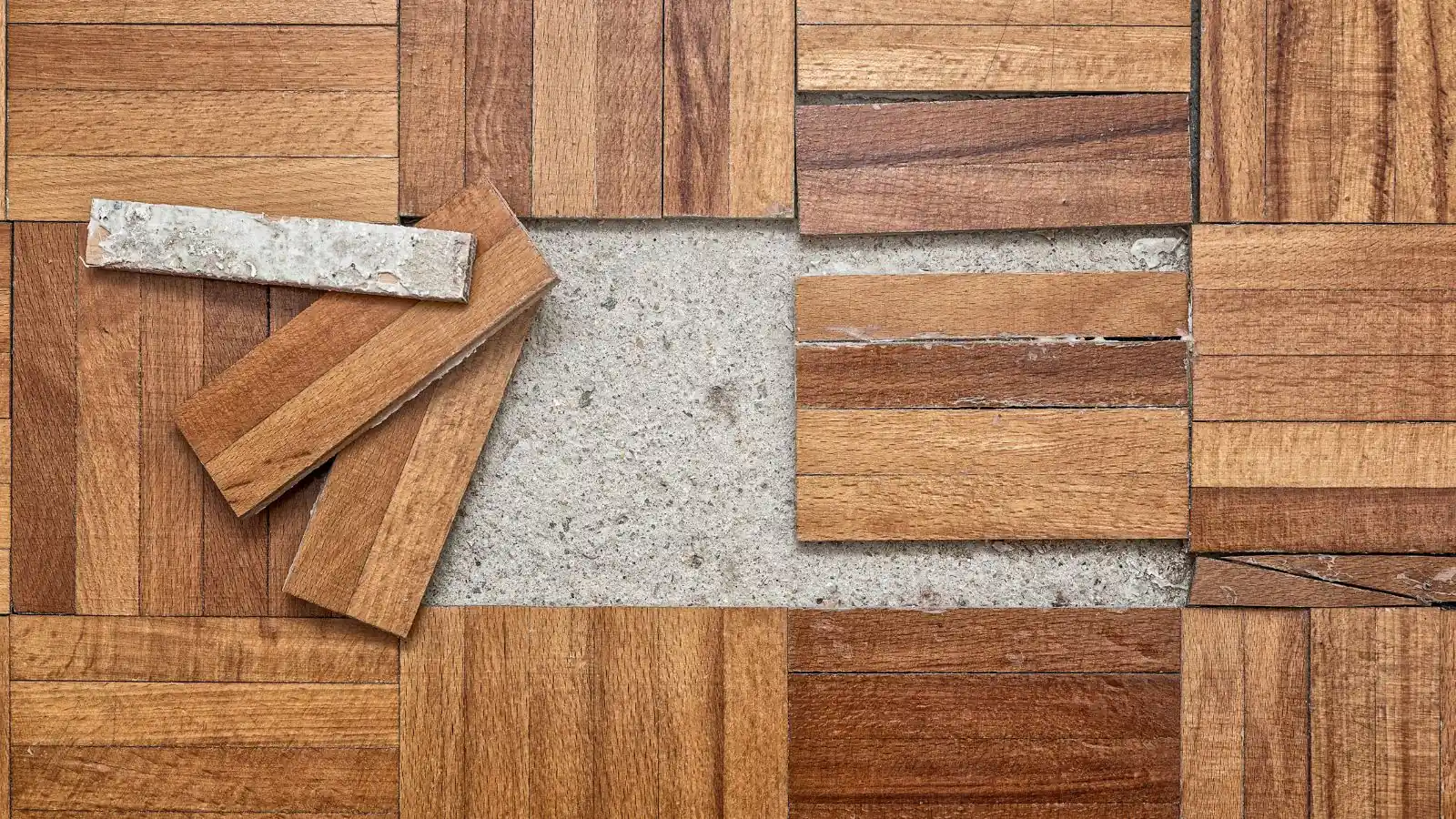
Hardwood floor water damage is the swelling, cupping, buckling and staining of wood and laminate flooring after it absorbs water. Wood is an organic material, and when it soaks up water the boards expand. When they dry unevenly, they distort. This page explains what you will see, what can be saved, and how drying decides the outcome.
If water is still on the floor, start with water extraction and call the line, which is answered 24/7. If the water is gone and the boards are warping, the steps below apply.
What a wet wood floor looks like
Boards show water damage in a few ways. Cupping is when the edges rise higher than the center. Crowning is the reverse. Buckling is when boards lift away from the subfloor. Dark stains, white haze and gaps between boards are also signs of moisture. A floor can look fine at first, and the distortion appears over several days as the wood dries unevenly.
Laminate and engineered flooring behave differently. Laminate has a fiberboard core that swells at the edges and rarely recovers, and engineered wood may delaminate. Solid hardwood has a better chance of recovery if it is dried properly.
Remove standing water
Mop or vacuum water off the surface, and lift rugs and furniture that hold water against the wood.
Do not seal it in
Plastic and vinyl mats trap moisture. Leave the floor open to air.
Do not sand yet
Sanding wet wood can trap moisture and make cupping worse.
Check the underside
If you can access a crawl space or basement below, look for dripping or wet subfloor.
Why drying comes before repair
Wood needs to return to a normal moisture content before any repair. Sanding, refinishing or replacing a floor while it is still damp traps moisture and can lead to new cupping or mold. Drying a hardwood floor often involves specialized equipment that pulls moisture out of the boards and the subfloor, and it can take days.
Some floors can be dried in place. Others, especially those with a wet subfloor or long exposure, need partial removal. Moisture readings in both the boards and the subfloor tell which path is realistic.
| Floor type | Typical response to water | Outlook |
|---|---|---|
| Solid hardwood | Cups or crowns as it dries | Often recoverable if dried quickly |
| Engineered hardwood | May delaminate | Case by case |
| Laminate | Swells at edges | Usually replaced |
| Parquet | Tiles can loosen or lift | Depends on adhesive and subfloor |
Water from below and from above
A hardwood floor can be wet from above, such as a leak or spill, or from below, such as a slab or crawl space source. Water from below is harder to see and often has been present longer. If your floor is cupping and you have not had a leak above, the slab leak or crawl space pages may point to the source.
Historic homes often have old hardwood that is worth saving. If your home is in one of the city's historic neighborhoods, such as Ghent or Riverside, mention the flooring age when you call so the crew can plan carefully.
Refinishing and replacing
After the floor is dry, you decide. Boards that have cupped slightly may flatten as they dry and then be sanded and refinished. Boards that have buckled or stained deeply may need replacing. A flooring contractor handles that part, and we can provide readings to show when the floor is ready.
The line is answered around the clock. Call and describe what you see.
Subfloor and sleepers
Beneath most wood floors is a subfloor, and sometimes a layer of sleepers or plywood. These hold water too, and a floor that looks flat can still sit on a wet subfloor. Readings in both layers decide when drying is done.
Ask the crew to show you the numbers, and ask what the target is for your type of flooring.
Our drying and removal work follows the ANSI/IICRC S500 standard for water damage, which sets out water categories and the readings that show a material is dry.
What affects the cost
We explain the scope and how it is priced before work starts. For a hardwood floor the factors are:
- The size of the wet area.
- The flooring type and thickness.
- Whether the subfloor is wet.
- The number of drying days.
- Refinishing or replacement, priced separately.
Insurance depends on the cause of the water. Ask your insurer what they need, and keep photos before and after drying. Want a real number? Call the line.
Near New Bern
Wood floors in Bridgeton and the rest of the area are dried the same way.
Hardwood floor questions
Can a cupped hardwood floor be saved?
Often, if the floor is dried properly and the cupping is not severe. Wait until it reaches normal moisture content before sanding.
How long does a wet hardwood floor take to dry?
It varies, but it can take days of controlled drying, and it is measured by moisture readings.
Should I sand the floor right away?
No. Sanding before the wood is dry can trap moisture.
Is laminate flooring recoverable?
Usually not, because the core swells and does not return to shape.
Will insurance pay to replace the floor?
It depends on the cause and your policy. Ask your insurer.
Call the 24/7 line and describe the damage in your own words.