
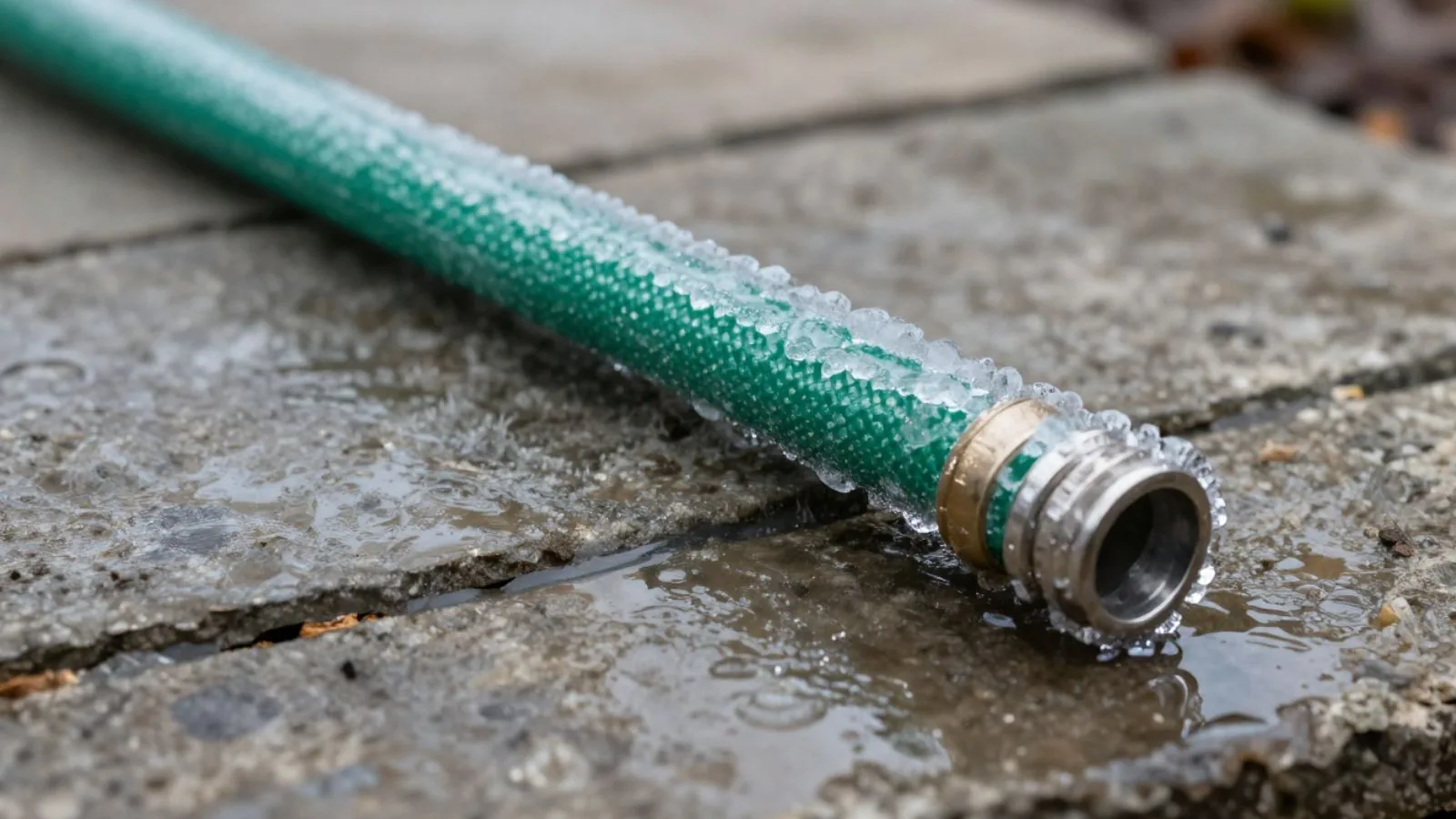
Frozen pipe water damage is what happens after ice splits a supply line and the thaw lets water pour out. If you are seeing water after a cold night, treat it as an emergency. The phone line is answered 24/7, including the early hours when many freeze failures first show themselves, and the first thing to do is close the main shutoff.
The tricky part of a freeze is the delay. A pipe can split while it is solid ice, and nothing leaks until the temperature rises and the ice turns back into water. By then the family may be at work or asleep, and the water has been running for some time before anyone notices.
Water after a freeze: what to do right now
Close the main valve, then open the faucets to relieve pressure and let the remaining water drain. Do not use a torch, a heat gun or any open flame to thaw a pipe. If part of the line is still frozen, gentle warmth from a hair dryer on a low setting, kept away from standing water, is far safer, but only after the main is closed.
If water is dripping through a ceiling light fixture, stay away from the switch. Call the utility or 911 about any electrical hazard, then call us.
Close the main first
Water coming out of a split line is under pressure, and closing the main is the quickest way to stop it.
Open a tap low and a tap high
This lets the line drain and keeps pressure from building at the split.
No flames
Never thaw a pipe with a torch. Use warm air from a hair dryer only once the water is off and the area is dry.
Take pictures, then call
Pictures of the split, the water line and the wet rooms help the insurer and help the crew plan.
Where freeze damage hides
Pipes in unheated spaces split first, such as crawl spaces, attics, garages and exterior walls. The failures that cause the most damage are the ones inside wall cavities and above finished ceilings, because the water has no obvious place to go and soaks insulation and drywall from the inside.
Climate honesty matters here. Hard freezes happen in coastal North Carolina, but the National Weather Service office in Newport and Morehead City, which covers New Bern, issues the freeze warnings, and your own pipes are the only reliable source for how exposed your house is. Ask a plumber whether pipes in your crawl space, attic or exterior walls need insulation, and keep your forecast handy during cold snaps.
Drying a house after a freeze split
The sequence is similar to other pressurized leaks. Standing water is extracted, wet insulation and drywall are removed from the affected cavity, and air movers and dehumidifiers run until readings return to normal. A freeze split often leaves a longer water trail than people expect, because the leak may have run unseen for hours.
| Frozen pipe location | What gets wet | Typical approach |
|---|---|---|
| Exterior wall | Insulation, drywall, baseboards | Cavity opened, insulation replaced |
| Crawl space | Joists, subfloor, insulation | Insulation removed, framing dried |
| Attic | Ceiling below, insulation above | Ceiling opened, attic and room dried |
| Garage or utility room | Slab, drywall, stored items | Extraction, drying, contents moved |
Once the water is off, a plumber should replace the split section before the structure is dried, or the whole house will get wet again. If a ceiling has bulged, the ceiling water damage repair page explains what comes next, and the crawl space water damage page covers the under-floor spaces where many splits start.
Our drying and removal work follows the ANSI/IICRC S500 standard for water damage, which sets out water categories and the readings that show a material is dry.
The line is answered around the clock. Call and describe what you see.
What affects the cost
We explain the scope and how it is priced before work starts. For a freeze split the unknowns are:
- How long the water ran before the main was closed.
- Whether the split was in a cavity, a crawl space or an attic.
- Which materials soaked, and whether insulation must be replaced.
- How many days the structure needs to dry.
- What rebuild follows.
Insurance coverage depends on your policy and on how the damage occurred. Many policies treat a sudden freeze split as a covered loss, and some require that you took reasonable steps to protect the home. Read your policy and call your insurer. Want a real number for your house? Call the line.
Nearby areas
The same work applies in Vanceboro and across the rest of the area we serve, including older houses in the neighborhoods near downtown.
Frozen pipe questions
Do you handle frozen pipe emergencies at night or on weekends in New Bern?
Yes. The phone line is open 24/7, and cold-weather calls often come in during the early hours. Close the main valve and call.
Should I wait until the pipe thaws before calling?
No. Close the main now, then call. Waiting only lets more water run once the ice melts.
Can a frozen pipe cause damage even if it does not burst?
Yes. A pipe can be damaged by ice and then leak slowly after it thaws, so check the area with a flashlight and watch for stains.
How can I protect pipes before the next freeze?
Insulate exposed lines, let a faucet drip during a hard freeze, and keep heat on in the house. A plumber can recommend specifics for your pipes.
Is freeze damage covered by homeowners insurance?
Often, but not always. Your policy and the circumstances decide. Call your insurer and ask what they require.
Call the 24/7 line and describe the damage in your own words.