
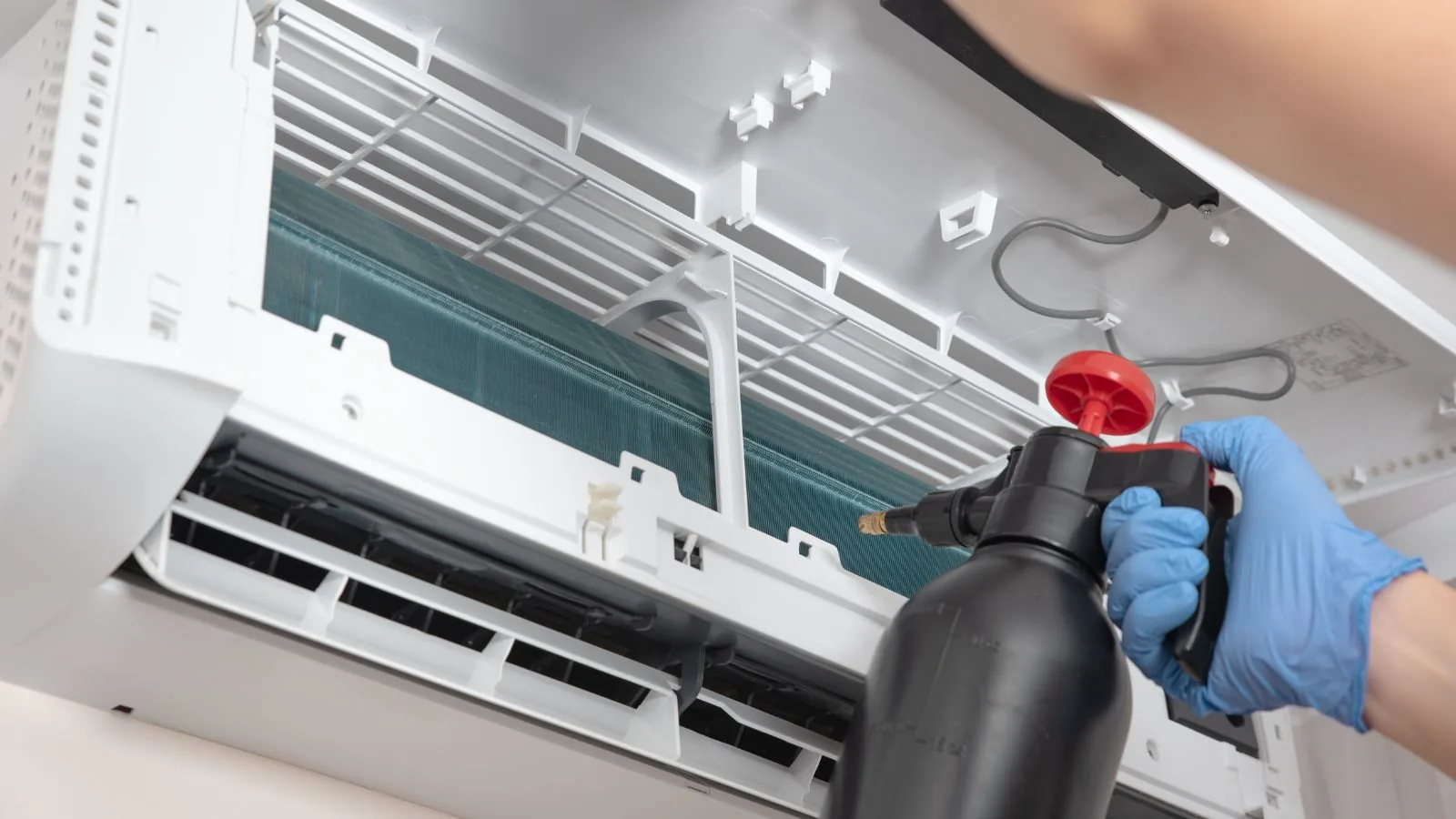
AC leak water damage is the staining, soaking and swelling that follows when an air conditioner's condensate drains fail and the water goes somewhere other than outside. An air handler pulls moisture from humid air all summer, and that water is meant to leave through a drain line or a pan. When the line clogs or the pan rusts through, the water finds the nearest way out through ceilings, closets and floors.
If you see water near the unit, switch the system off at the thermostat so it stops making more. An HVAC technician fixes the equipment, and we dry and repair what the water reached. If water is spreading fast, call the line, which is answered 24/7.
Signs that the AC is the source
An AC leak has a particular pattern. The stain is usually below or beside the air handler, which may sit in an attic, a closet or a utility space. Ceilings below an attic unit often show a brown ring that grows in humid weather and shrinks when the system is off. Floors around a closet unit may feel damp, with carpet that smells musty.
Another clue is timing. A condensate leak appears when the system is running hard, such as during a coastal heat wave. If your stain gets worse when the AC is on and stops when it is off, that suggests the cooling system.
Turn the system off
Switching off the thermostat stops the condensate from forming while you sort out the cause.
Check the pan and the line
If you can see the drain pan, look for standing water or a clogged line. Do not poke at it with tools you cannot control.
Protect the area
Place a towel or a bucket under drips, and move anything valuable.
Call two people
An HVAC technician for the drain, and us for the wet drywall, insulation and floors.
Why high humidity makes it worse
New Bern sits on a tidal river system, and warm, humid weather makes an air conditioner work harder and produce more condensate. That means a partly clogged line can handle a cool day and fail on a hot one. The practical point is to look at drain lines early in the cooling season, and to take a stain seriously even if it seems to dry out.
The slime that grows in drain lines is a common cause of clogs, and it does not announce itself. If you have had a leak once, treat it as a sign to ask a technician about maintenance, since the same line can fail again.
How the damage is dried and repaired
Crews find the wet areas with moisture meters and thermal imaging. If the ceiling below an attic unit has soaked through, the section is often cut open so the insulation and back side of the drywall can dry. Floors around a closet unit are extracted, and carpet pad is usually removed.
| Air handler location | Common damage | Typical response |
|---|---|---|
| Attic | Ceiling stain, wet insulation | Ceiling section opened, insulation replaced |
| Closet | Carpet, pad, baseboards | Pad removed, floor dried |
| Crawl space | Insulation, joists | Insulation removed, framing dried |
| Utility room | Slab or floor, wall bottoms | Extraction, drying |
If a stain has already darkened, the mold remediation page explains what to expect. The ceiling water damage repair page covers the finishing work on ceilings, and structural drying describes the equipment involved.
Our drying and removal work follows the ANSI/IICRC S500 standard for water damage, which sets out water categories and the readings that show a material is dry.
The line is answered around the clock. Call and describe what you see.
What affects the cost
We explain the scope and how it is priced before work starts. For an AC leak the factors are:
- How long the line has been leaking, since slow leaks cause more hidden damage.
- Whether the water reached ceilings, walls or floors.
- What materials are wet, including insulation.
- How many days the structure needs to dry.
- What repair follows.
Insurers often treat slow condensate leaks differently from sudden failures, and some policies exclude damage from continuous seepage. Your policy decides. Ask your insurer before repairs, and keep records of the technician's findings. Want a real number? Call the line.
Nearby
A clogged condensate line works the same way in a house in Vanceboro as it does in the city, so the advice on this page applies across the area we serve.
AC leak questions
Is an AC leak an emergency?
It can be. If water is running through a ceiling or onto a floor, switch the system off and call the 24/7 line. A small drip with a stable stain can wait for a normal appointment.
Can you fix the AC drain line?
No. An HVAC technician repairs the drain. We dry and restore the structure.
Why does the stain come back after I paint?
Paint does not fix moisture. If the ceiling is still damp, the stain returns, so dry it first and confirm with a meter.
Is there mold risk after an AC leak?
Yes, if materials stay wet. Drying quickly lowers the risk, and the mold page explains what to do if growth has started.
Will insurance cover the damage?
Coverage depends on your policy and on whether the leak was sudden or ongoing. Ask your insurer.
Call the 24/7 line and describe the damage in your own words.