
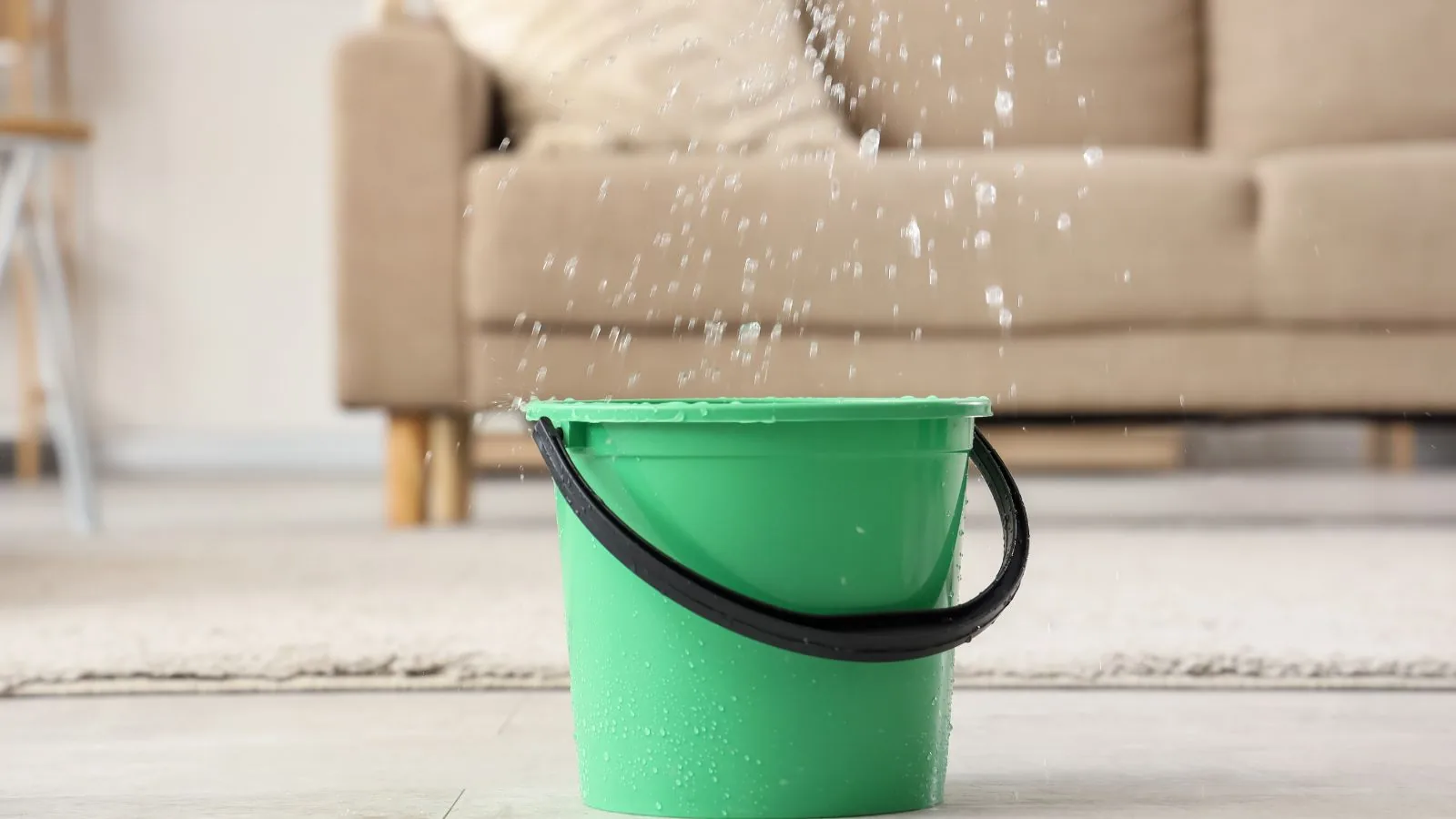
Appliance leak water damage is the damage caused when a washing machine, dishwasher, refrigerator or similar unit releases water onto the floor around it. If an appliance is leaking, treat it as an emergency. The line is answered 24/7, and the first moves are to unplug the unit if the outlet is dry and close the supply valve.
Appliance failures account for many of the calls a restoration line receives, and they are often discovered late. A washer hose can start dripping while the house is empty, and a fridge ice maker line can leak behind the unit for weeks. By the time the floor feels soft or a neighbor below sees a stain, the water has usually traveled.
An appliance is leaking right now
Find the small shutoff valves on the wall behind the unit, usually one for hot and one for cold in a laundry, and one for a fridge or dishwasher under the sink or behind the machine. Turn them off. If you cannot reach them, close the main.
Unplug the appliance only if the outlet and the floor around it are dry. If water is near the cord or outlet, leave it, stay out of the water, and call the utility or 911 if there is any electrical concern.
Shut the small valve
The valve behind the unit stops the flow to that appliance without shutting off the whole house.
Unplug only if dry
Water and power should never meet. If the outlet is wet, do not touch it.
Pull the machine out carefully
Once the water is off, move the unit to check for water behind it. Do not pull on hoses.
Take photos and call
Capture the unit, the floor and any stains on the ceiling below.
Where the water goes from each appliance
The appliance determines the pattern. A washer hose failure sprays a lot of water in a short time. A dishwasher drain leak often seeps into the cabinet next to it and under the floor. A fridge line leak runs behind and under the unit and can reach hardwood or subfloor long before it shows.
| Appliance | Typical failure | Where water ends up |
|---|---|---|
| Washing machine | Supply hose or drain hose | Laundry floor, nearby walls, rooms below |
| Dishwasher | Door seal, supply or drain line | Cabinet base, floor under the cabinets |
| Refrigerator | Ice maker or water line | Under and behind the unit, flooring edge |
| Upstairs unit | Any of the above | Ceiling and walls in rooms below |
If the water is spreading into cabinets and counters, the kitchen water damage page explains how those are handled. For a heater that is leaking rather than a laundry appliance, see water heater leak cleanup.
Drying around an appliance
Crews extract the water, lift flooring edges where needed, and use moisture meters to find the wet areas that sit behind the appliance. Cabinet bases that wicked water are often removed so the toe-kick cavity can be dried. Air movers and dehumidifiers run until readings come back down.
A leak that ran for weeks is a different job from one that ran for an hour. If you see a dark stain, soft subfloor or a musty smell, mention it on the call. It can mean that mold has begun to grow, and the mold remediation page explains how that is handled.
The line is answered around the clock. Call and describe what you see.
What to photograph
Before anyone moves the appliance, photograph the make and model, the hose or line that failed and the water on the floor. Keep the failed part if you can, since a plumber or your insurer may want to see it. Those photos and the part also help show what happened and when.
Our drying and removal work follows the ANSI/IICRC S500 standard for water damage, which sets out water categories and the readings that show a material is dry.
What affects the cost
We explain the scope and how it is priced before work starts. For an appliance leak the factors are:
- How long the leak has been active.
- What flooring sits under and beside the appliance.
- Whether water reached cabinets, walls or a lower floor.
- How many days of drying are needed.
- Whether the damage is hidden under finished surfaces.
Insurance often treats sudden appliance failures differently from long-running slow leaks. Your policy decides, so call your insurer and ask. Keep photos, the appliance model and any plumber's or installer's receipts. Want your real number? Call the line.
Questions about appliance leaks
Do you respond to appliance leak emergencies at night or on weekends in New Bern?
Yes. The phone line is open 24/7. Close the supply valve behind the appliance, unplug it if it is safe, and call.
Do you repair the appliance?
No. An appliance technician or plumber does that. We extract water, dry the structure and repair what was damaged.
How do I know whether the leak has been going on for a while?
Look for soft or stained flooring, a musty smell, or rust on the appliance base. These signs suggest a slow leak.
Can my floor be saved?
It depends on the material and the time wet. Tile and concrete dry fast. Carpet pad, laminate and hardwood are less forgiving.
Is an appliance leak covered by insurance?
Sudden failures are often covered, but your policy and the cause decide. Call your insurer and ask what they need.
Call the 24/7 line and describe the damage in your own words.