
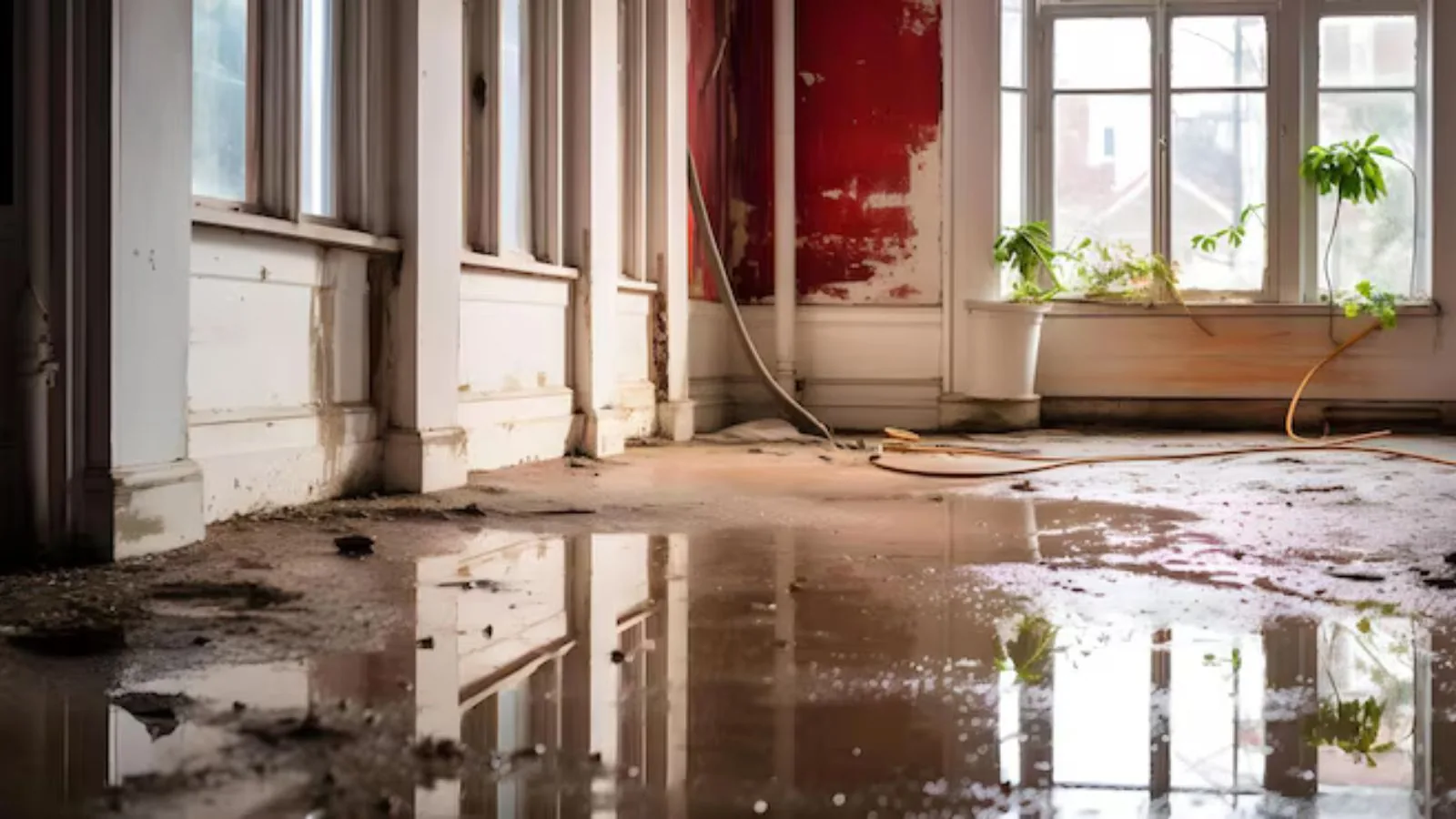
Flood damage cleanup is the removal, drying and sanitizing of a structure that took in river, tidal, groundwater or surface water. If water has entered your home or shop from outside, treat it as an emergency. The line is open 24/7, and until someone arrives you should stay out of the water, keep children and pets away, and avoid touching anything it has soaked.
Floodwater is different from a plumbing leak because it picks up soil, fuel, sewage and runoff on the way in. That puts it in the most contaminated category, and it changes what can be saved. Porous materials that sat in floodwater, such as carpet, pad, insulation and drywall, are usually removed rather than dried.
When floodwater is an emergency
Any water that has come in through a door, a vent, a foundation wall or up through a drain counts. So does water that has risen to the level of outlets, appliances or a furnace. If you are still in the building and the water is rising, leave first and call after.
Do not turn power on or off by touching a panel in wet conditions. If you smell gas, leave and call the utility or 911 before anything else. Our job starts once the building is safe to enter.
Get to a dry place
Leave a rising flood. Belongings can be replaced, and you cannot.
Photograph from the edge
Wide and close shots taken from a dry spot document the water line for your insurer and for the crew.
Do not run fans or the HVAC
Moving air spreads contaminants through the house, and wet equipment can be a shock hazard.
Call the line
Tell the dispatcher how high the water got, how long it stayed, and whether it is still rising.
Why New Bern floods the way it does
The city sits on the tidal Neuse and Trent rivers, and water can arrive from both sides. In 2018, Hurricane Florence drove a surge up the Neuse that the NC Sea Grant described as the biggest in the state, and a USGS gauge on the Trent River recorded 10.41 feet, according to the NC State Climate Office. Hundreds of water rescues followed.
Not every part of the city is exposed in the same way. The City of New Bern publishes a flood zone lookup map and a repetitive loss areas map, and the state's Flood Risk Information System shows hazard data for a specific address. Check your address there rather than assuming, and ask your insurer whether your policy includes flood coverage, since a standard homeowners policy usually does not.
How flood cleanup works
Crews first judge what the water carried and how long it stayed. Contaminated-water jobs begin with personal protective equipment, extraction, and the removal of materials that cannot be cleaned, then move to cleaning, sanitizing and drying.
| Material | Usually after floodwater | Why |
|---|---|---|
| Carpet and pad | Removed | Porous and hard to sanitize |
| Drywall and insulation | Cut out above the water line | Wicks contaminants and holds moisture |
| Hardwood and laminate | Case by case | Depends on species, depth and time wet |
| Concrete, tile, and framing lumber | Cleaned and dried | Non-porous or sturdy enough to sanitize |
| Upholstered furniture | Usually discarded | Cannot be fully cleaned |
After the removal, air movers and dehumidifiers dry the framing and slab until moisture readings come down. The structural drying page explains how that is measured.
The line is answered around the clock. Call and describe what you see.
Permits, substantial damage and your next decisions
Serious flood damage can bring floodplain rules into play. The City of New Bern defines substantial damage as repair cost that equals or exceeds half of the structure's market value, and it requires a floodplain development permit for work in a Special Flood Hazard Area. A structure flooded twice in ten years with repair costs averaging a quarter of its value can also trigger the rule.
If your home might be near that line, contact the city's Development Services department before you rebuild. It affects how high the floor must sit and what you can restore in place.
Our drying and removal work follows the ANSI/IICRC S500 standard for water damage, which sets out water categories and the readings that show a material is dry.
What affects the cost of flood cleanup
We explain the scope and how it is priced before work starts. These factors drive the number:
- Water category and how long the water stayed in the building.
- Square footage and how many floors took water.
- The amount of porous material that must be removed and replaced.
- Drying days, which depend on the structure and weather.
- Rebuild work, which is priced separately from cleanup.
On insurance, flood is usually excluded from a standard homeowners policy, and the NC Department of Insurance says flood insurance is sold through the National Flood Insurance Program. Whether you have it, and what it covers, is a question for your insurer. Want a real number? Call the line.
Related help
A flood often leaves sewage in the mix, so the sewage backup cleanup page is worth reading if drains overflowed. Wind and rain that came in through the roof or windows belong on the storm water damage page, and a lower level that took on water is covered under basement water damage. Calls also come from the low ground near the river in Bridgeton.
Flood cleanup questions
Do you handle flood emergencies at night or on weekends in New Bern?
Yes. The phone line is open 24/7. Floods often happen during storms at night, so call as soon as it is safe, and tell the dispatcher how deep the water got.
Is floodwater really that dangerous?
It can carry sewage, chemicals and bacteria. Avoid skin contact, keep children and pets out, and let professionals handle the cleanup.
Will homeowners insurance pay for flood damage?
A standard homeowners policy usually excludes flood, and the NC Department of Insurance says flood coverage comes through the National Flood Insurance Program. Check your own policy and call your insurer.
Can my carpet be saved after a flood?
Carpet and pad that sat in floodwater are usually removed, because they are porous and hard to sanitize.
How do I find out if my house is in a flood zone?
Use the City of New Bern flood zone lookup map or the state Flood Risk Information System, and ask the city's Development Services department if you want help reading the result.
Call the 24/7 line and describe the damage in your own words.