
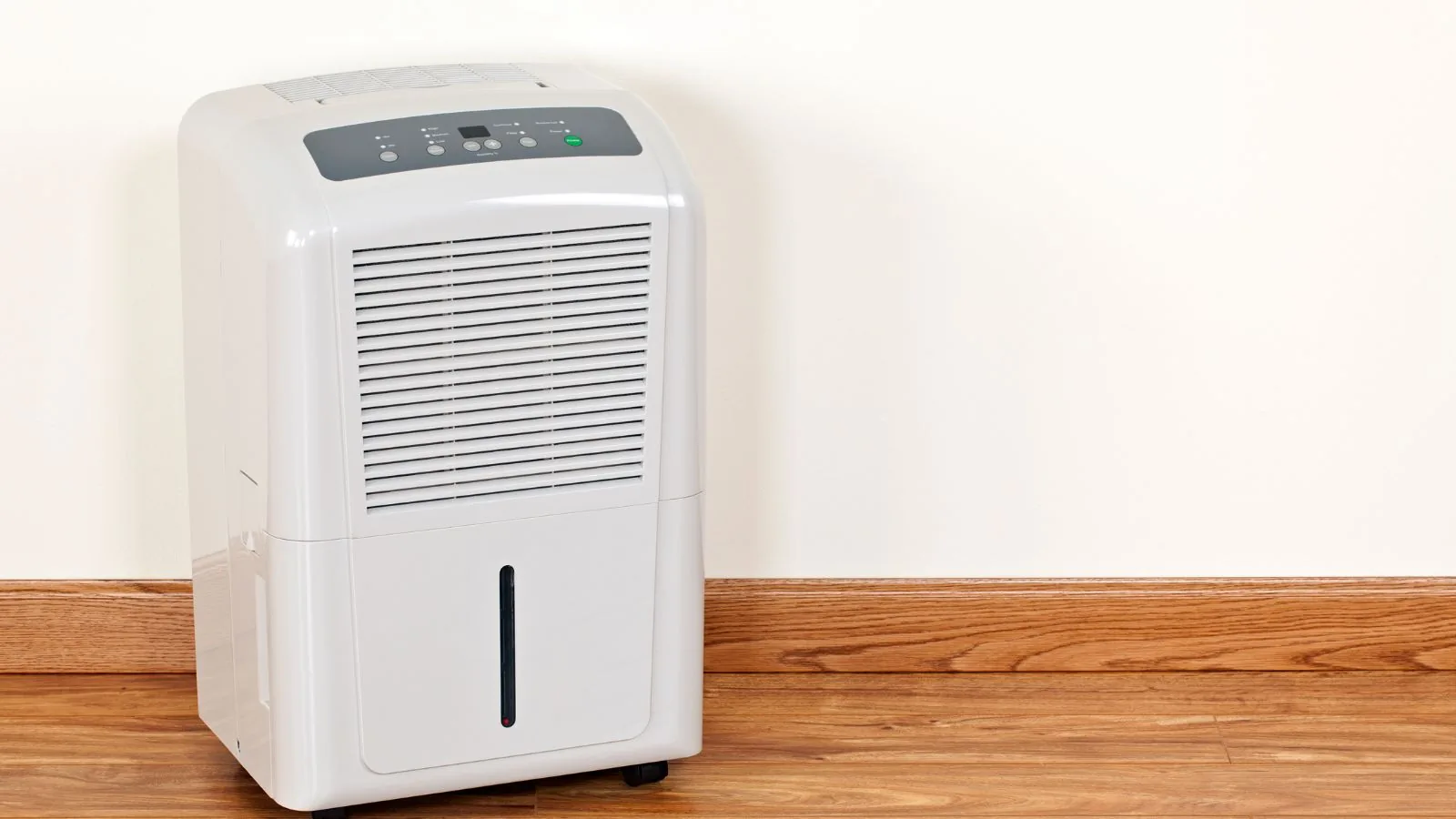
Structural drying is the controlled removal of moisture from the framing, subfloor, drywall and other materials of a building after water damage, using air movers and dehumidifiers and checking progress with moisture meters. It is the stage that follows water extraction, and it is the reason a house stops smelling like a wet basement.
If you are asking why your walls feel cold and damp days after the water was cleaned up, you are in the right place. This page explains what a dry-out involves, how it is measured, and why a few fans from a hardware store do not do the same job.
The walls feel damp, and the room smells: what is happening
Many people search for what they notice, such as a musty smell, a damp wall that will not dry, or a floor that still feels wet. Those are signs that moisture is still in the materials. The professional name for the process that fixes it is structural drying, also called water mitigation, and it works by pulling moisture out of materials and then out of the air.
Water does not only sit on the surface. It soaks into wood, drywall, plaster and insulation, and it moves in the air as vapor. A fan alone moves air around but cannot remove moisture from a closed building. That is why dehumidification is half of the process.
How structural drying works
Crews begin with moisture mapping, which uses meters and thermal cameras to find where water has traveled. They then place air movers to push air across wet surfaces, and dehumidifiers to remove the evaporated moisture from the air. In many jobs, wall cavities are dried through small holes or by removing baseboards, so the inside of the wall is not left damp.
Each day, the crew checks readings and adjusts equipment. The goal is to reach a dry standard for each material, measured against readings from unaffected areas of the same building. When the readings match, the equipment comes out.
| Equipment | What it does | Where it is used |
|---|---|---|
| Air mover | Moves air across wet surfaces to speed evaporation | Floors, walls, carpet edges |
| Dehumidifier | Removes moisture from the air | Whole rooms and sealed areas |
| Moisture meter | Reads moisture in wood and drywall | Every wet material, daily |
| Thermal camera | Shows temperature patterns that can indicate wet areas | Mapping, finding hidden water |
| Wall cavity drying system | Moves warm dry air through a wall | Behind cabinets and baseboards |
Why drying takes days
Drying is limited by the physics of moisture. Water in framing and plaster leaves slowly, and the air in the room can only hold so much at a time. Humid coastal weather makes it harder, because the air already carries a lot of moisture. A job that would finish quickly in dry weather may take longer in a damp, warm week.
For you, the point is that a finished dry-out ends with numbers. Ask whoever dries your house what readings they are aiming for and how they will show you. Crews work to ANSI/IICRC S500, the published standard for water damage restoration, and you can ask any company whether theirs do.
The line is answered around the clock. Call and describe what you see.
Water mitigation in practice
Mitigation is the term for stopping further damage. It begins with stopping the source and extracting water, and continues with drying and removing materials that cannot be saved. Doing it quickly is what keeps a repair small. A wet drywall wall caught on day one may be dried. The same wall on day five may need replacing.
Different materials call for different handling. The hardwood floor page explains what happens to wood, the carpet page covers pad and fibers, and the wall and drywall page explains cavity drying.
What affects the cost
We explain the scope and how it is priced before work starts. For drying, the factors are:
- The number of wet rooms and the volume of air that must be dried.
- The materials involved and how deeply they absorbed water.
- The number of drying days, which depends on weather and structure.
- The amount of equipment needed.
- Whether any materials must be removed first.
Insurance depends on your policy and on what caused the water. Ask your insurer what they want documented, such as moisture readings and photos, which we can provide. Want a real number? Call the line.
Serving the area
Drying works the same way in a house in the city and in Pollocksville, though the humidity outdoors and the age of the building affect how long it takes.
Drying questions
How long does a structure take to dry?
It depends on the materials, the amount of water and the weather. The end point is a moisture reading, not a set number of days.
Can I just use fans and open windows?
Fans help, but open windows in humid weather can add moisture. Dehumidifiers remove the moisture from the air.
Why does the equipment run all day?
Evaporation continues as long as materials are wet. Running equipment continuously keeps the process moving.
How do I know the structure is dry?
Readings in the wet materials match readings from unaffected areas. Ask to see them.
Is water mitigation the same as drying?
Mitigation includes extraction, drying and removal of unsalvageable materials. Drying is a major part of it.
Call the 24/7 line and describe the damage in your own words.