
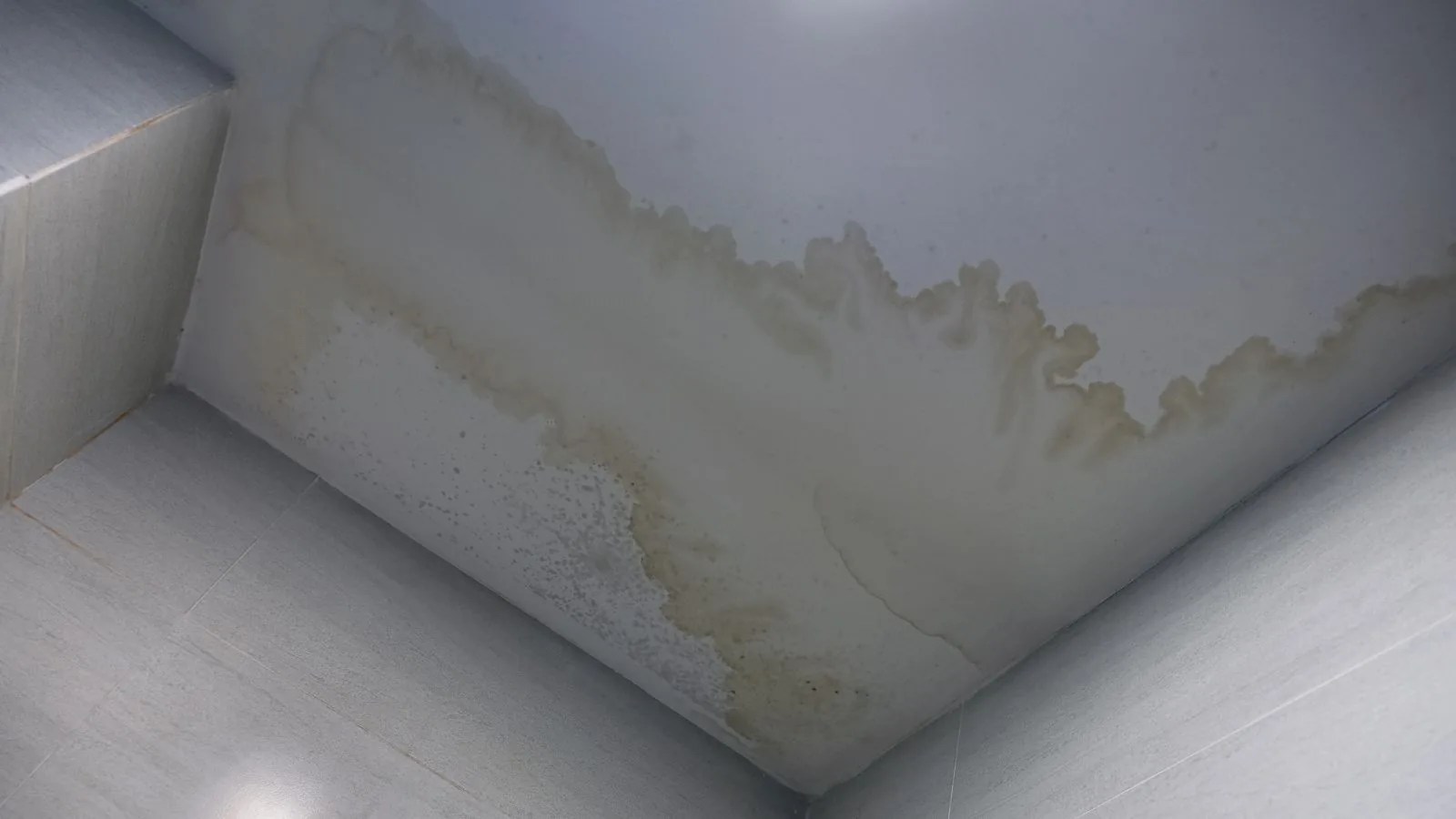
Ceiling water damage is any water damage to a finished ceiling and to the framing and insulation above it, whatever the source. A ceiling that is brown, bulging or dripping is an emergency. The phone line is answered 24/7, and while you wait you should keep people out from underneath it and move furniture aside.
A sagging ceiling is holding water, sometimes a lot of it. Drywall that has soaked through can drop without warning, and plaster can fall in sheets. Stay clear, and do not poke it with your hands.
When a ceiling is an emergency
Active dripping, visible bulging, a growing stain or any water near a light fixture is urgent. If water is coming through a fixture or fan, stay away from the switch and call the utility or 911 about the electrical risk before you call us. Do not stand on a wet floor under a failing ceiling.
Do not poke or cut into a bulging ceiling yourself. The water above it can come down all at once, and wiring or a fixture may be close by. Keep clear of the area below it, and let the crew relieve the pressure from a safe position.
Clear the room
Move people, pets and valuables away from the area below the damage.
Control the water
A bucket under a drip is useful. Leave a bulge alone and keep out from under it.
Do not use the fixture
A wet light fixture or fan is an electrical hazard. Leave it off.
Find the source if you can
Check the room above or the attic with a flashlight, and note what you see.
Roof leaks, upstairs leaks and attic leaks
The ceiling itself is rarely the source. Water arrives from above, and the source decides the repair path. A roof leak sends rainwater through decking and insulation. A bathroom or laundry upstairs sends supply or drain water through the floor system. An attic air handler sends condensate through the ceiling below.
This page owns roof leaks too, which is why you will see them covered here and not on a separate page. We do not repair roofs, and a roofer needs to fix the leak. What we do is extract water, open the ceiling where needed, remove wet insulation and dry the structure, so you are not repairing over wet framing.
| Source | Typical pattern | What happens to the ceiling |
|---|---|---|
| Roof leak | Water follows rafters, stains appear away from the leak | Wet insulation removed, ceiling section opened |
| Bathroom or laundry above | Rings below the fixture | Ceiling opened, subfloor above checked |
| Attic HVAC | Stain below air handler | Ceiling dried, line repaired by HVAC technician |
| Plumbing in the ceiling | Spreading stain | Section opened, plumbing repaired |
Drying and repairing a wet ceiling
Crews find the extent of the damage with moisture meters and thermal imaging. Wet insulation is removed, since it holds water and keeps the structure damp. Drywall that has soaked through, bulged or fallen is cut out, and air movers dry the cavity.
Plaster ceilings need extra care. They can hold water for a long time, and a historic home may need a repair approach that respects the original finish. The wall and drywall repair page explains how cut-out sections are rebuilt, and the AC leak water damage page covers condensate sources.
The line is answered around the clock. Call and describe what you see.
A note on historic homes
New Bern has a National Register historic district with 492 contributing structures, and two others at Ghent and Riverside. Work on a historic structure may have its own review requirements, so ask the city before you change original finishes. The practical point is to document what is there and dry it carefully before any repair choice.
Insulation above the ceiling
Above many ceilings sits insulation, and it holds water against the drywall below. Wet insulation loses much of its value and can feed mold if left in place, so crews usually remove it where it has soaked. Tell the dispatcher if you can see insulation through a gap or if you have an attic hatch the crew can use.
Our drying and removal work follows the ANSI/IICRC S500 standard for water damage, which sets out water categories and the readings that show a material is dry.
What affects the cost
We explain the scope and how it is priced before work starts. For a ceiling the factors are:
- The area of the ceiling that is wet or damaged.
- Whether insulation above is wet.
- Whether the ceiling is drywall or plaster.
- The number of days of drying.
- The painting and finish work after repair.
Roof leaks and ceiling damage are among the claims where cause matters, such as whether a storm opened the roof. Ask your insurer what is covered. Want your real number? Call the line.
Ceiling questions
Do you handle ceiling water damage emergencies at night or on weekends in New Bern?
Yes. The phone line is open 24/7. Keep clear of the ceiling and call.
Do you fix the roof?
No. A roofer repairs the leak. We dry and restore the structure.
Can I just paint over the stain?
Not until the area is dry. Paint will not stop moisture.
Does wet insulation need to be replaced?
Often, yes, because wet insulation holds moisture against framing.
Will my insurer cover the damage?
That depends on the cause and your policy. Photograph the damage and call your insurer.
Call the 24/7 line and describe the damage in your own words.