
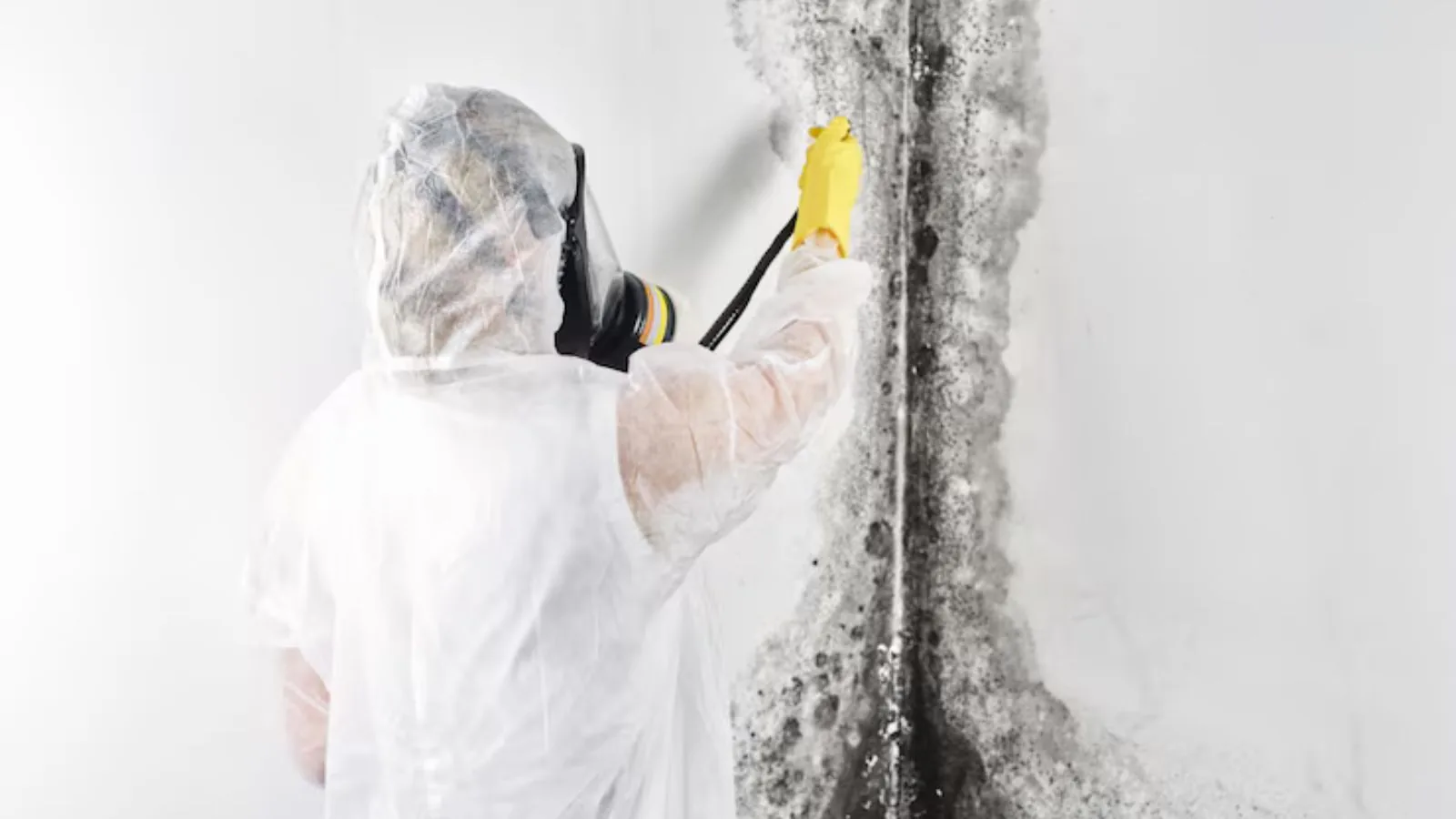
Mold on a wall is one of the most common reasons homeowners search for help after a leak, and it is also one of the most misunderstood. A patch on a wall can be mold, a stain, dirt or paint damage, and it may be the visible edge of a bigger wet area.
This guide explains what causes mold on walls, how to look at it sensibly, and what to do before you pick up a scrub brush.
Why mold shows up on a wall
Walls are made of layers. Paint covers drywall, drywall has a paper face, and behind it is framing and sometimes insulation. Mold needs moisture and something organic to eat, and the paper face of drywall is a good one. When a wall stays damp for more than a day or two, the paper can start to support growth, and the growth may appear on the surface or stay hidden inside.
The moisture usually comes from one of a few places. A pipe or fixture can leak inside or behind the wall. A roof or window can let water run down. A cold wall in a humid room can sweat. A wall on an outside corner can stay damp if air does not move across it. Finding which one is the work of a moisture meter and a thermal camera, not guesswork.
Plumbing wall
Bathroom, kitchen and laundry walls often have supply lines and drains inside them.
Outside wall
Roof edges, windows and doors can let water into the wall below them.
Cold corner
Condensation on cool surfaces in a humid room can feed growth over time.
Behind furniture
Large pieces against a wall can trap damp air. Pull them out a few inches.
How to look at it without making it worse
Start by looking, not scrubbing. Note the size, the color and whether the patch is flat or fuzzy. Feel whether the wall is cool or soft, and check for a smell. Look above and below for a stain, and check the room on the other side of the wall. A leak often starts higher than where the mark appears.
Do not paint over it. Paint hides the mark and traps moisture, and the spot comes back. Do not sand it, because sanding can put material into the air. If the patch is small and on a hard surface, cleaning it can be reasonable, but if it returns after cleaning, treat that as a sign that the cause is still present.
When a wall needs a crew
Some situations call for professional help. A patch larger than a small area, a wall that is soft or swollen, a smell that persists, mold that returns after cleaning, or any wall that stayed wet after a leak. In those cases the crew measures the moisture, decides whether the wall can be dried in place or must be opened, and plans containment so disturbed material stays in the work area.
The wall and drywall page explains the difference between drying a wall and cutting it out, and the mold remediation page explains the stages of remediation. Water that came through a ceiling is covered on the ceiling water damage page.
| Wall condition | What it suggests | Usual approach |
|---|---|---|
| Small surface spot on tile or paint | Condensation or splash | Clean, improve ventilation |
| Spot on drywall near plumbing | Possible slow leak | Check the pipe, measure moisture |
| Soft or swollen drywall | Long-term wetting | Open the wall, remove wet material |
| Spot that returns | Moisture still present | Find the source before cleaning again |
What the work involves
For a wall with mold, the crew contains the area with plastic sheeting, uses air filtration, removes affected drywall and insulation, cleans framing with HEPA vacuums, and dries the cavity. The wall is then rebuilt by a drywall and paint contractor, and we provide readings to show it is ready. Any honest scope will say that the work depends on what is found when the wall is opened.
The line is answered around the clock. Call and describe what you see.
Rooms where walls stay damp
Bathrooms, laundry rooms and kitchens are the usual places where walls collect moisture. A bathroom fan that does not vent outside, a dryer vent that leaks into a wall and a window that sweats all keep surfaces damp. Fixing the airflow is often part of the answer, and it costs far less than repeating a cleanup.
Local notes for New Bern
Older homes and historic districts
New Bern has historic districts, and the National Register district downtown lists about 492 contributing structures. Ghent and Riverside are separate listed districts, and the Riverside listing covers houses built from 1894 to 1921. If your home is in a historic district, ask the City of New Bern whether changes to visible original materials need review before a wall is opened or rebuilt.
For permits, the Inspections Division page lists trade work among the items that need one. A wall opened to remove mold may involve any of those trades, so check before work starts. In Pollocksville, which is in Jones County, ask the local authority instead.
What affects the cost
For a wall, the scope is explained before work starts, and the price follows it. What moves the figure is how much wall is wet, whether the cavity and insulation are affected, the containment needed, the drying days and the rebuild and paint, which are separate. Insurance depends on the cause of the water and the policy, so ask your insurer and keep photos. A call gets you a number for your wall.
Questions about mold on walls
Is the dark patch on my wall definitely mold?
Not necessarily. Dirt, soot and stains can look alike. A test or inspection confirms it.
Can I paint over mold on a wall?
No. Paint traps moisture and the spot returns. Find and fix the moisture first.
Why is there mold on a wall in a room with no leak?
Condensation, poor airflow or a cold outside wall can keep a surface damp enough for growth.
Do old plaster walls in historic New Bern houses need different handling?
They hold moisture longer than drywall, so a crew measures first and plans a gentle approach. Ask the city about review rules in historic districts.
Call the 24/7 line and describe the damage in your own words.