
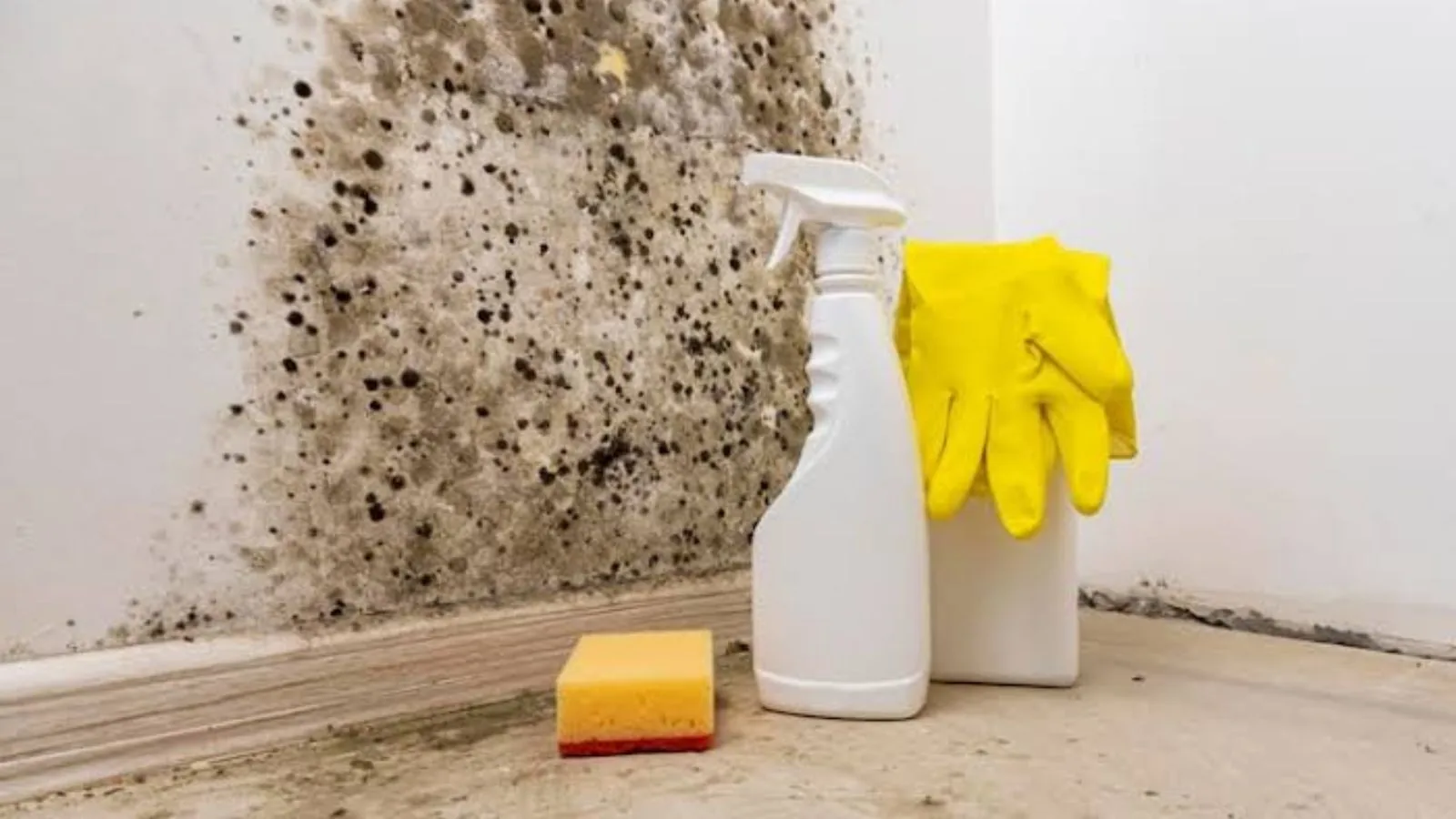
Black mold is a popular name for dark-colored mold growing in a home, and people who find it usually want to know one thing, which is how worried they should be. This guide is written for New Bern, NC homeowners.
It explains what the name means, what you can safely conclude from a dark spot, and what to do next. It does not give medical advice, and questions about how mold affects a person belong with a doctor.
What people mean by black mold
The name is used loosely. Many kinds of mold look dark green, gray or black, and color alone does not identify a type. A spot that looks black on a bathroom ceiling might be one species, and a similar-looking spot in a closet might be another. Dirt, soot and old water stains can look alike too. Only a trained inspection or a lab test can say what a particular patch is.
That is why a calm first step is better than a panicked one. Note where the spot is, how big it looks, and whether the area is damp or has been. Those three facts matter more to the plan than the color.
The question that matters: where is the moisture?
Mold needs moisture to grow, and the main control for it is moisture control. The U.S. Environmental Protection Agency says this in its guidance for homes and schools, and the same idea runs through the industry standard for remediation, ANSI/IICRC S520. If the moisture stays, cleaning a spot only buys time.
So the useful question is where the water came from. A leak under a sink, a roof drip, a window that sweats, a supply line behind a wall, and a crawl space that stays humid are all common starting points. A moisture meter and a thermal camera can show wet areas that you cannot see, which is often a larger area than the visible patch.
Look at the source
Check for a drip, a stain that grows, or a room that stays damp.
Leave it undisturbed
Scrubbing or sanding can spread material into the air. Wait for a plan.
Close the room
Keep the door shut and avoid running a fan that pushes air through it.
Write it down
Photograph the spot with a date, and note when you first saw it.
Should you test for it?
Testing is a decision with trade-offs. A test can tell you whether spores are present and what type they are, but it does not tell you whether the area is safe or what to do about it. Many homeowners find that the visible growth and the moisture readings are enough to plan the work.
Testing is more useful when a buyer, a landlord or an insurer asks for it, or when you suspect growth you cannot see.
If you do test, use an independent party who does not also sell removal. That separation keeps the testing honest. We can tell you when we think testing would help, and we do not require it before we plan a job.
What removal looks like
Remediation follows a pattern. The crew finds and addresses the moisture, contains the work area with sheeting and filtered air, removes materials that cannot be cleaned reliably, cleans what remains with HEPA vacuums, and dries the structure. Porous materials such as drywall and carpet pad are usually removed if mold has grown in them, because they cannot be cleaned through. Hard surfaces can often be cleaned in place.
The mold remediation page explains the stages in more detail, and the structural drying page explains how the building is brought back to normal moisture levels. No honest company can promise that mold will never return. The promise that can be kept is that the visible growth is addressed and the conditions that fed it are corrected.
| What you notice | What it might point to | A reasonable first step |
|---|---|---|
| Musty smell, nothing visible | Moisture in a wall or floor | Ask for moisture readings |
| Dark spots on a ceiling | A roof or pipe leak above | Find the source before cleaning |
| Spots in a bathroom corner | Condensation and poor drying | Improve ventilation, then reassess |
| Stain that returns after paint | Moisture still present | Stop the water, then dry the area |
The line is answered around the clock. Call and describe what you see.
Health questions belong with a doctor
People often ask whether mold is harmful. That is a medical question, and we are not medical professionals, so we do not answer it. If someone in the home is worried about how they feel, they should talk with a doctor.
For information about indoor air, the EPA and the CDC publish guidance for the public. What we can say is that wet, moldy materials should be handled with care and that large areas are better left to a crew with containment.
Local notes for New Bern
New Bern homeowners and mold paperwork
Permits and inspections for renovation and repair in the city come from the Inspections Division, whose page lists plumbing, electrical and mechanical work among the permit items. If mold removal leads to rebuilding walls or replacing wiring or ducts, ask the division which permits apply before work starts.
If you are outside city limits, in a place such as Bridgeton or Vanceboro, your permit office may be the county, so ask the county inspections office instead. Keep photos, readings and invoices together, because insurers and buyers sometimes ask for them.
What affects the cost
Mold work is priced from the scope, which we explain before work starts. Expect the number to move with the size of the affected area, how far moisture has spread, whether porous materials come out, the containment needed, the drying days and any rebuild, which is priced apart. Coverage depends on the cause of the water and the policy, so ask your insurer first. Want a figure for your house? Call the line.
Questions about dark mold
Is every black spot on a wall mold?
No. Dirt, soot and stains can look the same. An inspection or lab test confirms what it is.
Does the color tell me the type of mold?
No. Many types appear dark, and color alone does not identify them.
Can I wipe it off and move on?
A small surface spot on a hard material sometimes can be cleaned. If it returns, the moisture is still there.
Where do I check permit rules for repairs after mold removal in New Bern?
The City of New Bern Inspections Division lists its permit requirements on the city website, and county offices handle addresses outside city limits.
Call the 24/7 line and describe the damage in your own words.